
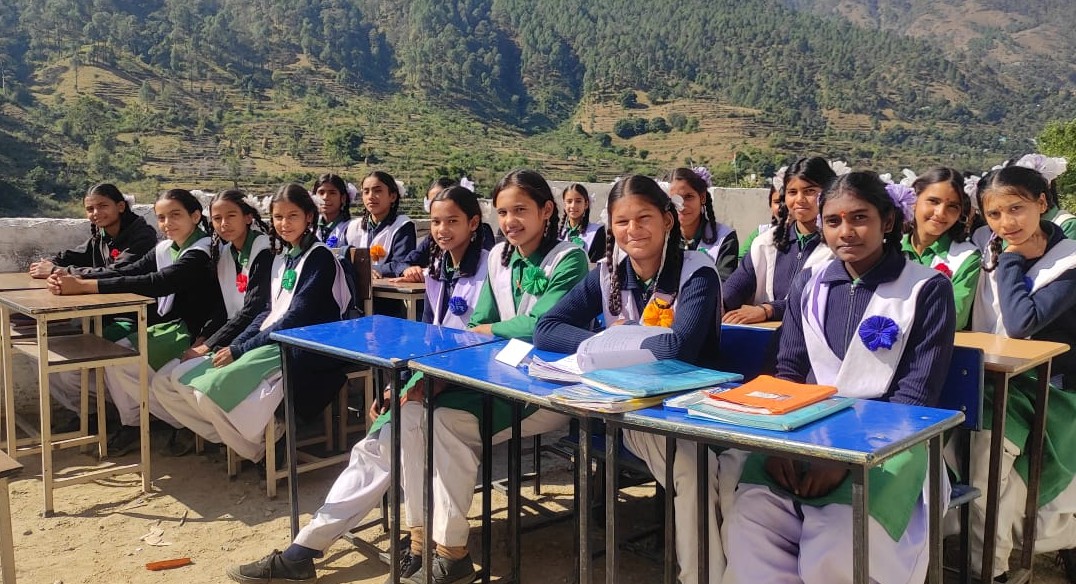
EMPOWERING TEACHERS TO PROTECT THE GANGA RIVER BASIN
While ecological studies and climate change have found their way into many national and international curriculums and teacher training programmes around the world, environmental topics are not necessarily a priority everywhere.
Nidhi Singh of The Wildlife Institute of India looks at how the WII has been working to redress the balance in an environmentally sensitive area of the country.
Beginnings
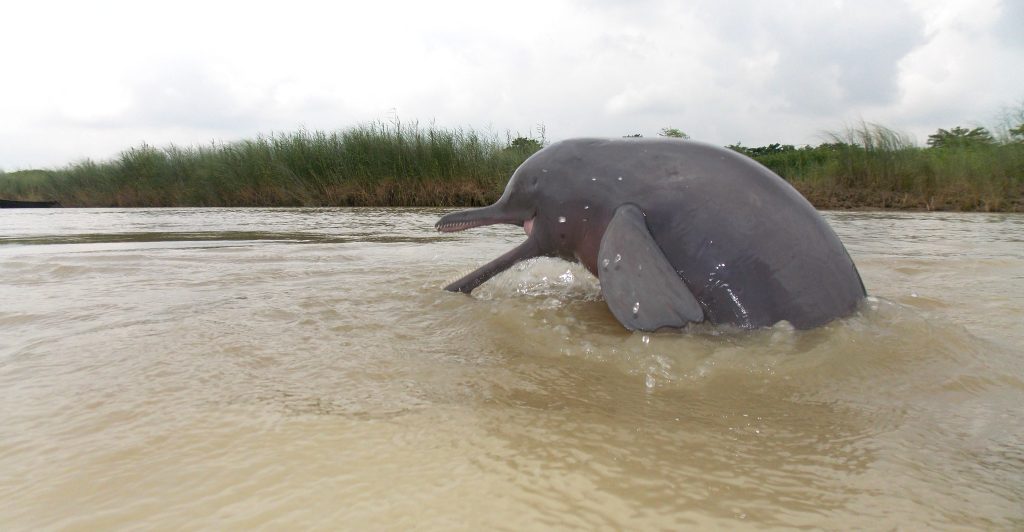
The year was 2022, when, during one of our school awareness workshops, a conversation with a student left a lasting impression on us. While discussing the conservation of the Gangetic dolphin, a blind, freshwater species living in the Ganges water systems surrounded by a huge human population, a student confidently argued that killing dolphins was acceptable because, they were “just fish, and people needed fish for survival“. When we explained that the Gangetic dolphin is actually a mammal and a legally protected species, his response was startling:
“So what if they all die? Humans will find a way to survive.”
Even more concerning to us was the silence that followed. Nobody in the room challenged his view – neither students nor teachers. And in that moment, we realized, it was not just a misunderstanding about a species, but it reflected a lack of awareness and empathy towards other living forms, not only among the students but also, it seemed, among the teachers guiding them.
Changing our approach
Our team knew that the conservation of this species was of huge importance – but this was just not obvious on the ground here. We knew our message had to change and it also struck us that conservation education cannot succeed by focusing on students alone. Their teachers, as the primary influencers of young minds, needed the knowledge, insight and the confidence to nurture environmental values. This realization became the foundation of a new initiative to build a teacher training program at the grassroots level, recognizing that informed educators are essential for building a new generation in India that values and protects biodiversity.
Developing the programme
Delivering high-quality teacher training programmes is not cheap or easy and preparing teachers and their students for real-world dynamic challenges like climate change or environmental education, would require more than just a blackboard. We sensed that in helping teachers become more aware of environmental issues, it would be important to think about the way the programme would be taught in order to get the students actively involved. We ambitiously decided to try and equip teachers with the necessary knowledge, skills, behaviours, and attitudes to perform their tasks effectively both inside and outside the classroom. (Dange and Siddaraju, 2020).
The programs also needed to be dynamic in order to improve learning outcomes and ensure teachers were well-prepared to meet the complex learning needs of students in a rapidly changing environment (Moeini, 2008).
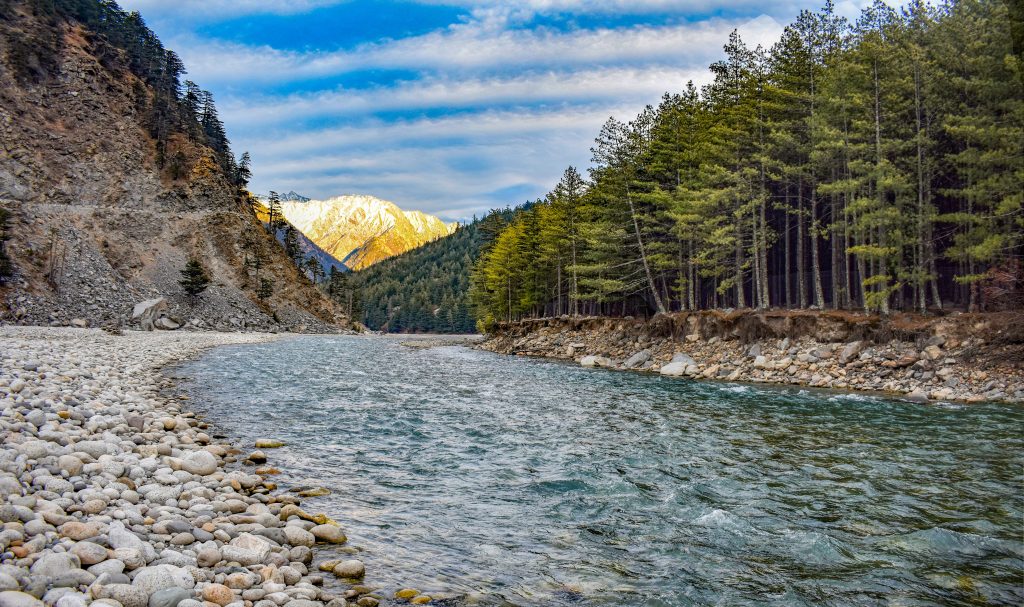
We designed teacher training programs across the Ganga River Basin to empower educators through interactive awareness programs and environmental education tools, promoting sustainable development and conservation awareness. The teacher training program that we designed tries to overcome traditional educational challenges by addressing the limitations in standard teaching and learning methods.
Resources
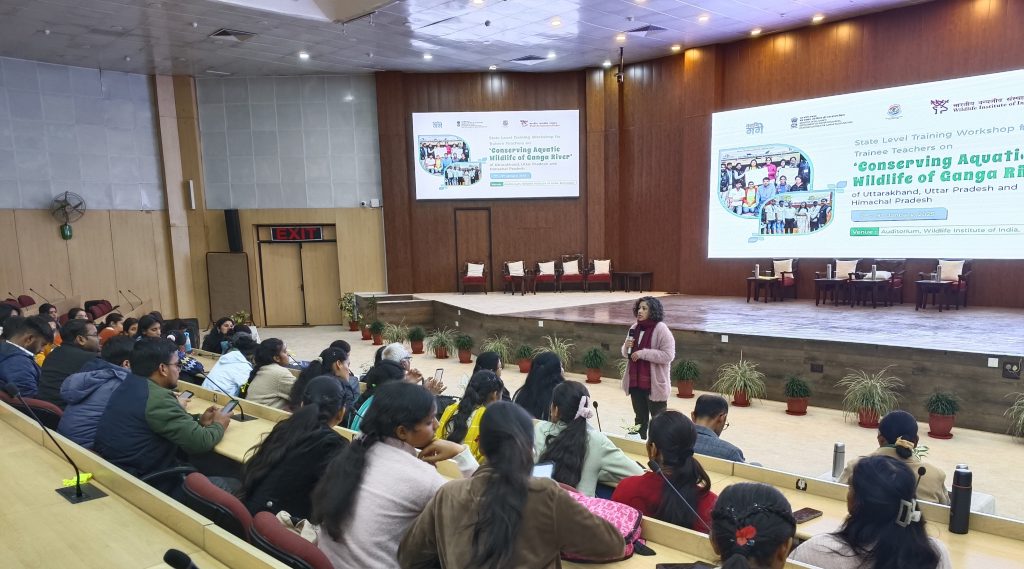
In short, we tried to model the approach that we wanted teachers to use when working with their students. Our training programs acts as an interactive, activity-based approach that promotes innovative teaching methods and experiential learning rather than just supply- driven lectures. What makes our approach different is not only the methodology we used, but also the tools we provided to the teachers, suggesting, for example, the use of gamification and tangible tools. In the workshops we used the Discovering Ganga teacher training manual and interactive games like Snakes and Ladders, Web of Life, Biodiversity Dart, and Species Puzzles to promote more active learning. We thought that there should not only be presentations, but also hands-on activities designed to engage participants in experiential learning.
Resource kit
Inspiration needed to be matched by practical tangible tools, so, following training sessions each school was provided with a resource kit – Ganga Gyan Kosh – which equips schools with practical tools like a water testing kit, educational games, origami materials, puppets, video resources on a pen drive and fact sheets about river biodiversity and plastic pollution to ensure teachers could integrate engaging and informative environmental education into their daily lesson plans.
Who we worked with and where
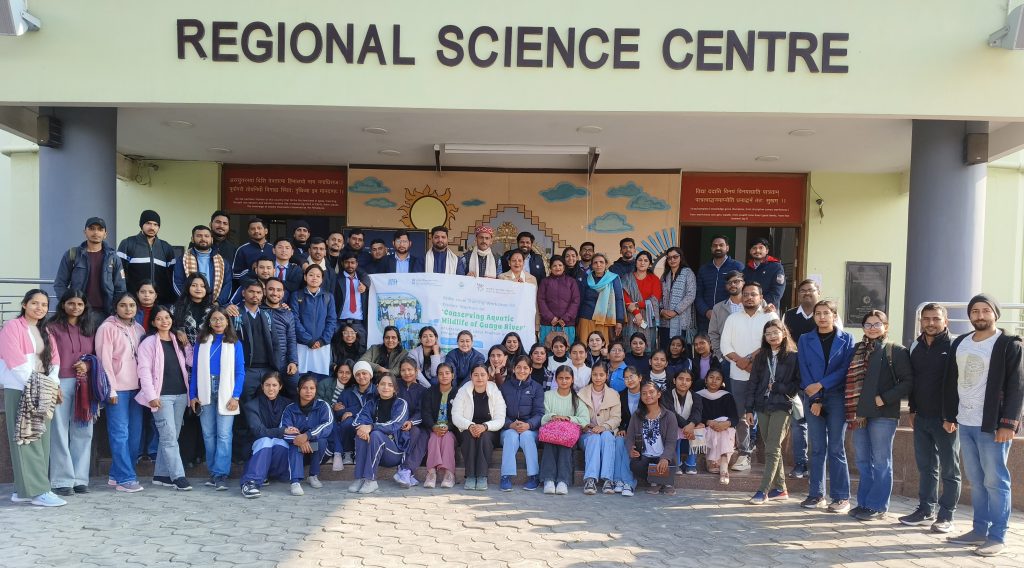
The teacher training program was conducted with both pre-service and in-service teachers in a strategically targeted initiative designed to have large-scale grassroots impact in the Ganga River Basin. The selection of in-service and pre-service teachers for the training program was guided by their availability and willingness to participate. For pre-service teachers, participants were chosen from the District Institutes of Education and Training (DIETs) whose lecturers also participated, which was great. In the case of in-service teachers, the focus was on those working in schools where student awareness workshops had earlier been conducted, allowing for continuity and reinforcement of conservation education.
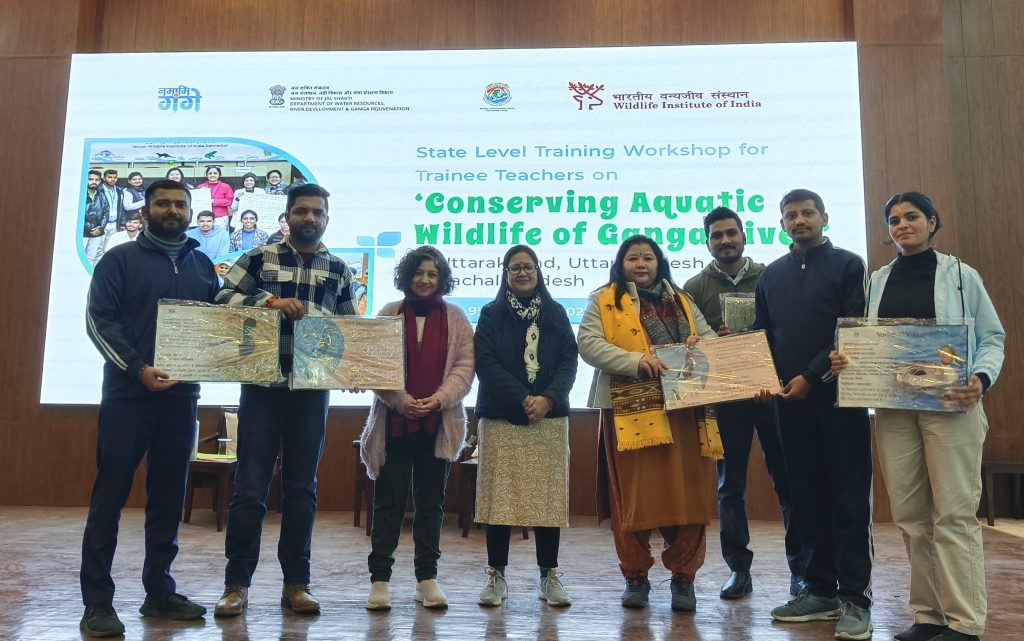
The program has now trained 489 pre-service DIET (District Institutes of Education and Training) trainee teachers, 34 DIET lecturers, and 961 in-service teachers. Our main aim was to connect local environmental conservation issues directly to the educational content, thus, bridging the gap between standard curriculum and current ecological needs of the river basin.
Ripple effect
We regard this training program as an investment in creating an adaptable and inspired set of motivated educators. By equipping these teachers with ecological knowledge and practical tools, we hope to create a ripple effect and that these educators will go on to inspire many more students in local communities, fostering a new generation dedicated to water resource management and the preservation of riverine biodiversity.
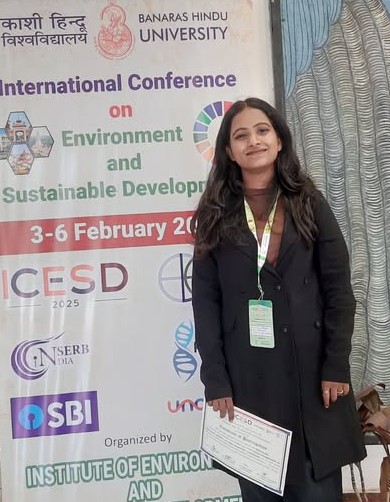
Nidhi Singh is Senior Project Associate at the Wildlife Institute of India
All images kindly provided by – The Wildlife Institute of India
References
1. Darling-Hammond, L. (2020). Accountability in teacher education. Action in teacher Education, 42(1), 60-71.
2. Dange, J. K., & Siddaraju, J. (2020). Role of teacher training program in enhancing quality education. International Journal of Education, Culture and Society, 5(6), 137.
3. Moeini, H. (2008, December). Identifying needs: A missing part in teacher training programs. In Seminar. net (Vol. 4, No. 1).
4. Kumar Pradeep & Azad Sugandha. (2016). Teacher education in India: Some Policy issues and Challenges, International journal of advanced research and
innovative ideas in education, 2(6), 1217-1224.
5. Singh Laxman & Shakir Mohd. (2019). Teacher Education: Issues and Concerns in Current Scenario, International Journal of Research and Analytical Reviews, 6(2), 1082-1091.
