
FACILITATING CREATIVITY
Penny Moon argues that neuroscience suggests that to foster creativity we simply need to get out of the way.
The neural home of creativity
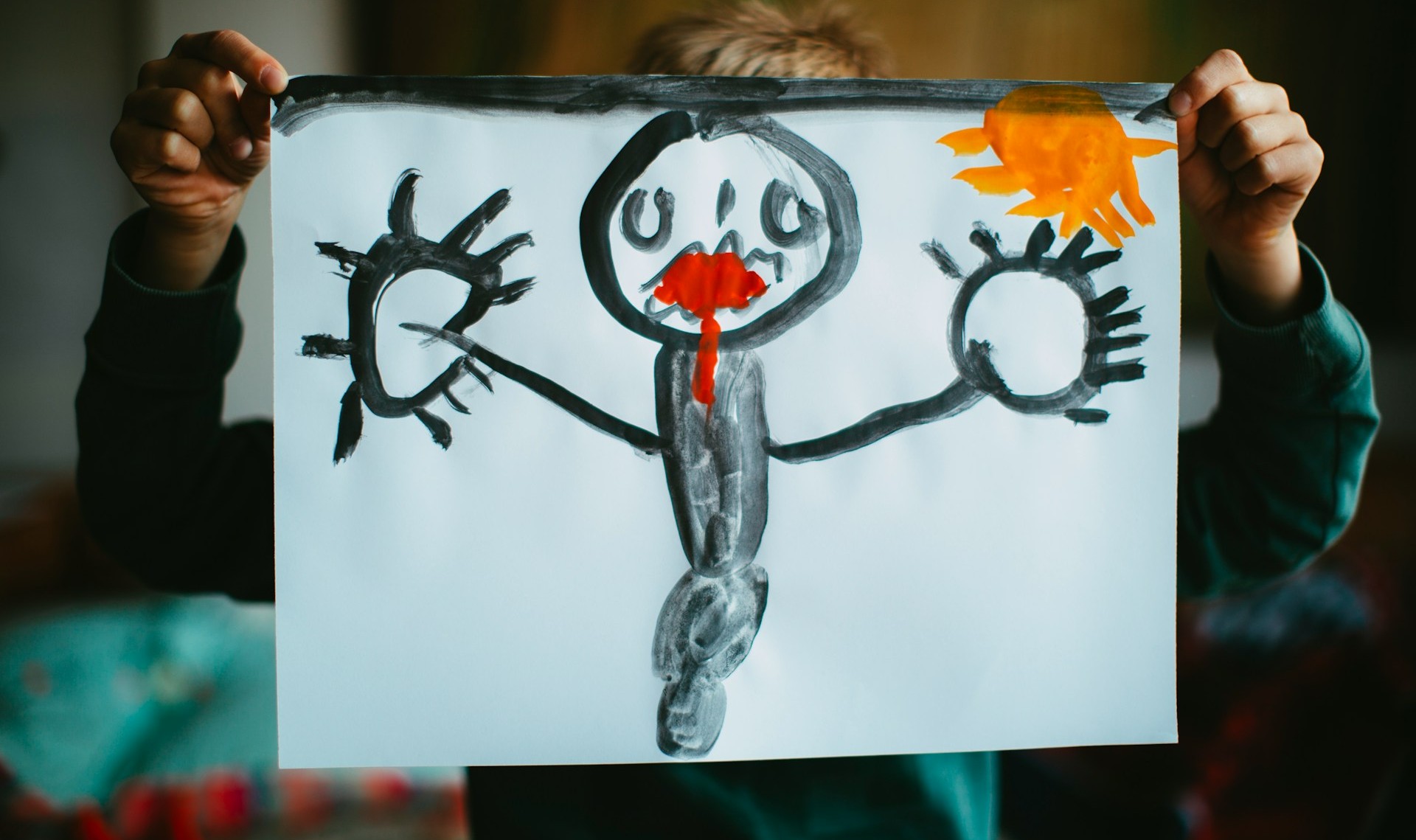
Ask a child to draw an animal that doesn’t exist and watch what happens. Without hesitation, they’ll reach into their mental library and pull out a seal’s body, an elephant’s trunk, four octopus arms and one lizard eye. They won’t ask if that’s allowed. They won’t worry whether it’s right. They’ll just begin.
Neuroscientists at Rockefeller University have just published research in Nature that explains, for the first time, exactly where in the brain this happens. The ventral premotor cortex — long dismissed as a basic motor-planning region — turns out to be what lead researcher Winrich Freiwald calls “a mental typewriter”: a region that holds abstract symbolic building blocks and recombines them into entirely new ideas. It is, in short, the neural home of creativity.
I have been working with children, teachers and families for over forty years. For most of that time, I have been telling anyone who would listen that creativity is not a nice-to-have. It is not the thing you do on a Friday afternoon when the real work is done. It is the engine of learning itself.
Now the science is catching up.
Tracking creativity
In designing A Quiet Place, a therapeutic learning environment that uses guided visualisation, sensory space and mindfulness to support children’s emotional and cognitive development, we wanted to build in a measurement tool to track its impact. We measured the things you’d expect: anxiety, self-esteem, concentration, emotional regulation. But we also measured the impact on creativity. As far as I know, this is rare.
We did it because we understood, even before the neuroscience confirmed it, that creativity and emotional wellbeing are not separate domains. A child who feels safe enough to imagine, is a child whose brain is working at its best. The Theta brainwave state — that relaxed, receptive, slightly dreamy state between waking and sleep — is precisely the state in which the ventral premotor cortex does its most extraordinary work. It is the state we deliberately create in A Quiet Place. The results, consistently, showed that children who went through the programme didn’t just feel better. They thought more flexibly. They drew stranger monsters.
What Ken Robinson knew
Sir Ken Robinson spent his life arguing that schools were educating creativity out of children. His 2006 TED talk remains the most-watched education talk in history, and his central point — that we are so afraid of children being wrong that we teach them not to try — has lost none of its urgency.
The new neuroscience gives Robinson’s argument a biological foundation. The ventral premotor cortex develops its symbolic recombination capacity through use. Like a muscle, it grows stronger when exercised and atrophies when ignored. Every time a child is told to colour within the lines, copy the model answer, or wait to be shown the right way, we are, quite literally, under-using a cognitive system that evolution spent millions of years developing. The good news is that it is never too late to start.
The AI dimension
I want to say something that may be surprising in an article about creativity: I have been collaborating with an AI to write about creativity and mental health in education for a new book.
Not because AI can replace human creativity — it cannot, and it knows it – but because the process of working with an AI has taught me something important about my own creative process. When I describe an idea to the AI, I am forced to articulate what I actually mean. When it reflects something back, I can see my own thinking more clearly. It is, in its way, a form of the compositional generalization the Rockefeller researchers describe: taking familiar symbolic units — my forty years of experience — and recombining them into something new.
Three ideas for developing creativity
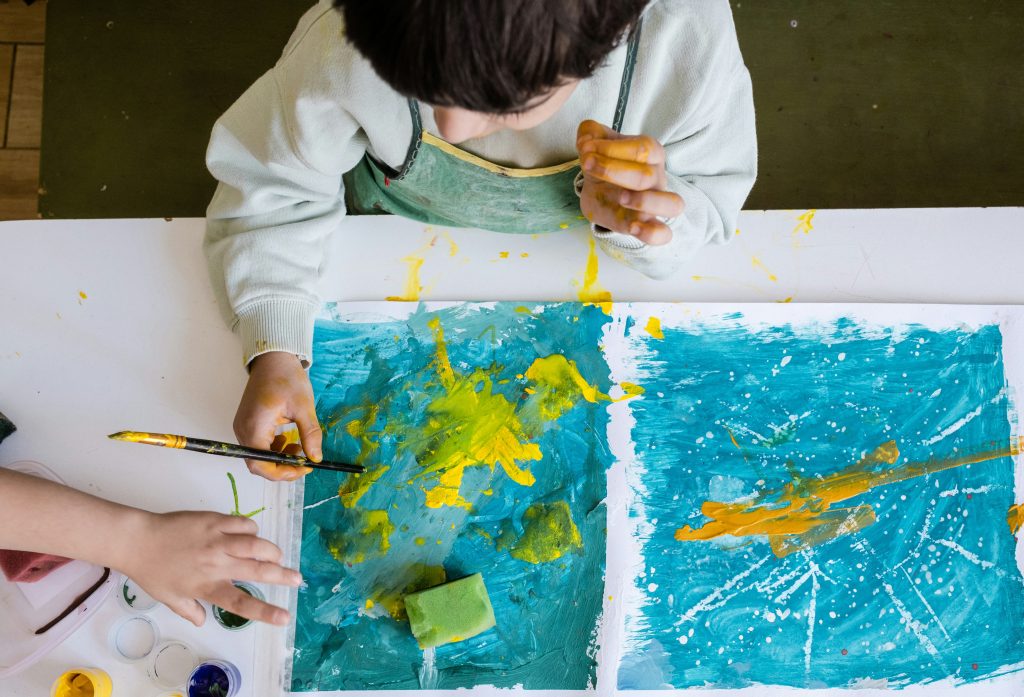
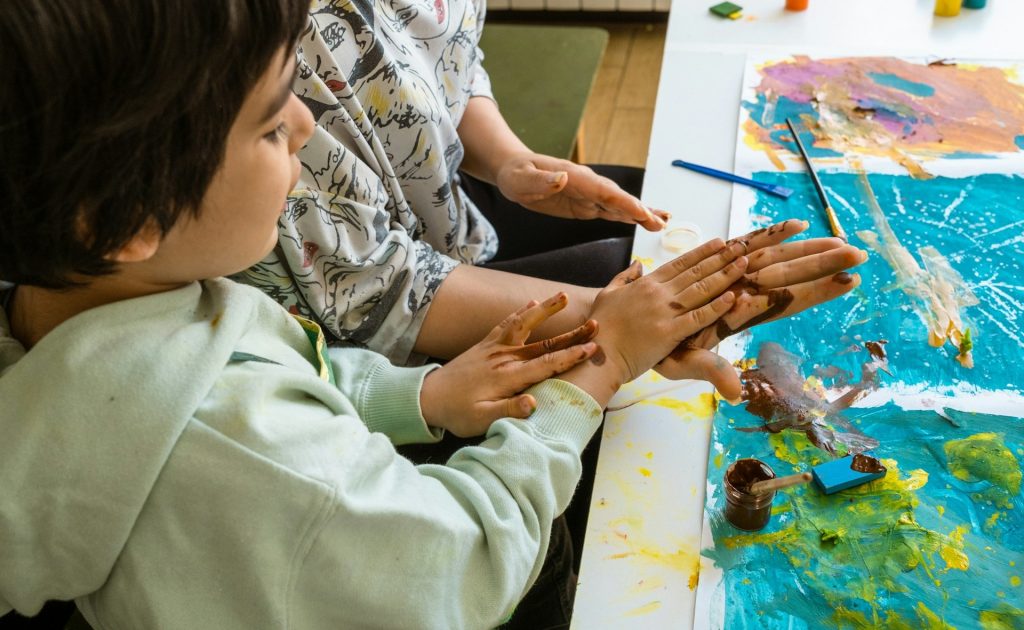
So, what can teachers try to encourage a child’s creativity that builds on our new understanding about neuroscience? The ventral premotor cortex does not need a specialist programme or a research budget. It needs permission. Here are three things that cost nothing:
- Give children five minutes of silence before a creative task. Not silence as punishment — silence as preparation. Let the Theta state arrive. It will.
- Ask “what else could this be?” more than “what is this?” The recombination engine runs on possibility, not correctness.
- Draw a monster yourself. Nothing gives children permission to be creative like watching an adult be genuinely, unselfconsciously creative in front of them.
The science is clear. The brain is built to create. Our job, as educators, is simply to get out of the way.
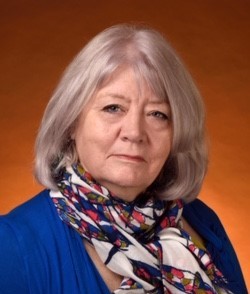
Penny Moon is a UKCP registered psychotherapist, former teacher and founder of A Quiet Place. She has worked with schools, families and organisations across the UK for over 40 years.
Find out more at https://www.aquietplace.co.uk/
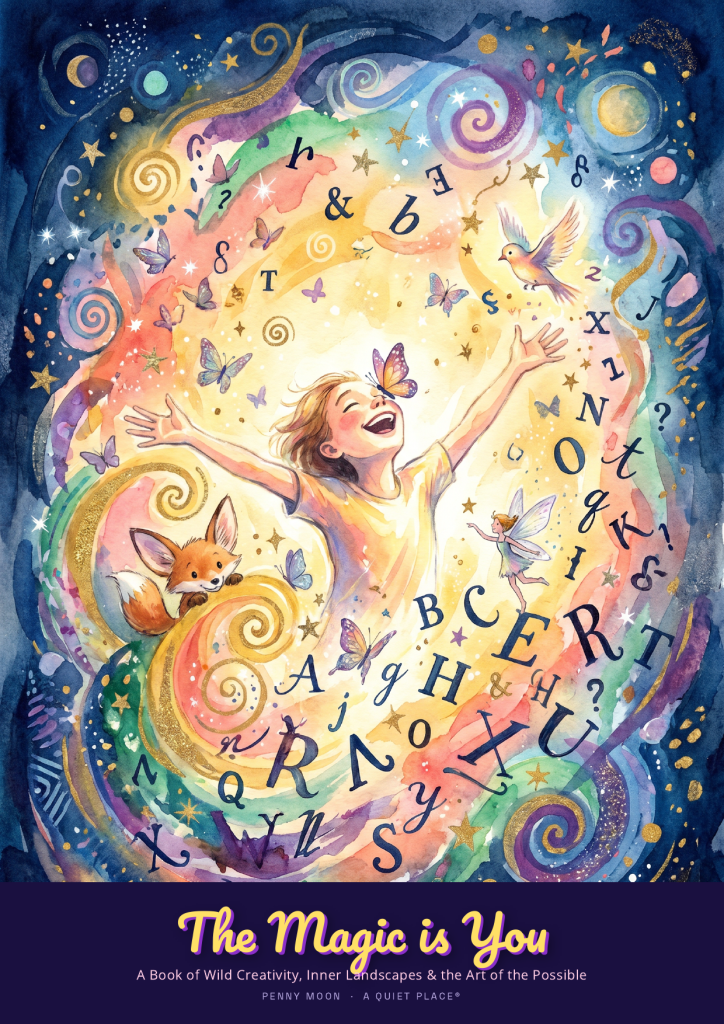
Her new book, The Magic is You, is in development.
“Mystery is not the absence of explanation.
It is the presence of something
larger than the explanation.”
— PENNY MOON
FEATURE IMAGE: by Markus Spiske on Unsplash
Support Images: by Lia Den on Unsplash & Lia Bekyan For Unsplash+
