

A PARTNERED FRAMEWORK FOR BRITISH INTERNATIONAL NURSERY EDUCATION IN THE GCC
Although partnered British schools are well-established in the Gulf, British nursery education is not. This may be about to change. Mandy Edmond and Andrew Elias report.
Understanding the paradox
Across Saudi Arabia and the UAE families choose British education with confidence from primary school upward. British partnered Nursery Education, however, is less well established. For K-12 operators, and for the region, that gap in provision is worth understanding.
Look at the international education market in Saudi Arabia or the United Arab Emirates and one thing is quickly clear. The British curriculum school is an established, trusted, premium choice. Families know the names. They understand what a British education offers and they are prepared to pay for it. From primary school through to Year 13, the category is mature and the leading brands are well-known.
Now ask those same families where a British education actually begins and who provides it. The answers are far less certain. Nurseries, pre-schools and kindergartens exist in abundance, many of them very good, but no British early years brand has done in the nought-to-five space what the established names have done in K-12. British-style market leaders for early years are yet to be established.
That is not a small detail. It is, we would argue, one of the most interesting gaps in the regional education market today, and it matters because the earliest years are not the run-up to a British education. They are the beginning of it.

National strategies for the Early Years
This is not a need that anyone has to argue into existence. The governments of the region have already named it, and they are building around it at pace.
In Saudi Arabia, early childhood sits inside Vision 2030’s Human Capability Development Programme, which aims to develop human capability from early childhood onward. The Kingdom has set one of the most ambitious early years targets anywhere, projecting that kindergarten enrolment will be lifted from around seventeen per cent toward ninety per cent by 2030. Vision 2030 anticipates well over a thousand new private schools to meet demand, so the scale of the ambition is set. A quality framework equal to it is being built.
In the UAE, the direction is the same and the timing is immediate. Dubai’s 2033 education strategy places early years, family wellbeing and workforce development among its priorities. In November 2025, Dubai’s regulator launched its first quality framework dedicated entirely to early childhood care and education, defining what quality should look like across nurseries, pre-schools and school early years departments, signalling that a more formal quality assurance system will follow. From the 2026 to 2027 academic year, the UAE has also reformed its admissions framework so that children can enter Pre-Kindergarten earlier, a change the Ministry of Education has tied explicitly to national strategy and to research on child readiness.
Read together, these are not isolated policy moves. They are two governments deciding, in public, that the earliest years are considered to be critical parts of the national infrastructure. The standard has been called for, but has not yet been claimed.

Why this is a K-12 opportunity
For a K-12 operator, it would be easy to read all of this as a worthy but secondary concern. That would be a mistake. The earliest years are not adjacent to the K-12 opportunity. They are the front door to it.
Families make long-term education decisions far earlier than schools tend to assume. A family’s first trusted experience of an education provider often begins when their child is a baby or a toddler. If that experience is thoughtful, professional and genuinely child-centred, it builds confidence not only in the early years setting but in the whole journey a family imagines beyond it. A strong nought-to-five offer is therefore not a feeder service bolted onto a school. It is the first chapter of a relationship that can run all the way to Year 13.
It also changes the quality of every transition that follows. A child who has been known since infancy arrives at each new stage with a history attached: their temperament, their family context, their communication style, their strengths, their emerging needs. The move from nursery, into Reception and into the years beyond becomes more informed and less abrupt. And it is the ground on which trust is built through evidence rather than marketing. Families who join in the earliest years see how staff communicate, whether safeguarding is taken seriously, whether their child is known as an individual. A family that feels known from the start treats the school as a long-term partner. Younger siblings follow. Reputation grows on lived experience, which is the only kind that lasts. A high-quality under-fives offer is not a feeder service. It is the first chapter of a relationship that can run to Year 13.
Training for Early Years staff
The reason this gap has stayed open is that the earliest years are genuinely hard to do well at scale. Quality at this age is relational. It depends on the adult in front of the child, and on the training, frameworks and quality assurance that produce and sustain that adult. It is unique and distinct, not an extension of existing practice that can simply be added on.
This is the work Norland has been involved with since 1892. Founded in London by the education pioneer Emily Ward, Norland was the first institution in the world to offer professional early childhood training. Today it is a TEF Gold-rated specialist higher education provider, soon to be recognised as the world’s first University of Early Childhood, and its graduates are regarded internationally as the gold standard in early years practice. The reputation is built on evidence, not on marketing.
What makes that standard portable is that it is held in frameworks, not in personalities, consisting of
- A curriculum structure for nought-to-four-year-olds, which can be adapted to local culture and language
- High-order training assessed against seven defined areas of quality and recognised only when the framework is met in full
- A four-stage practitioner training architecture, with train-the-trainer pathways that build local senior staff rather than depending on imported ones
- A whole-family proposition that treats parents as partners from the first day.
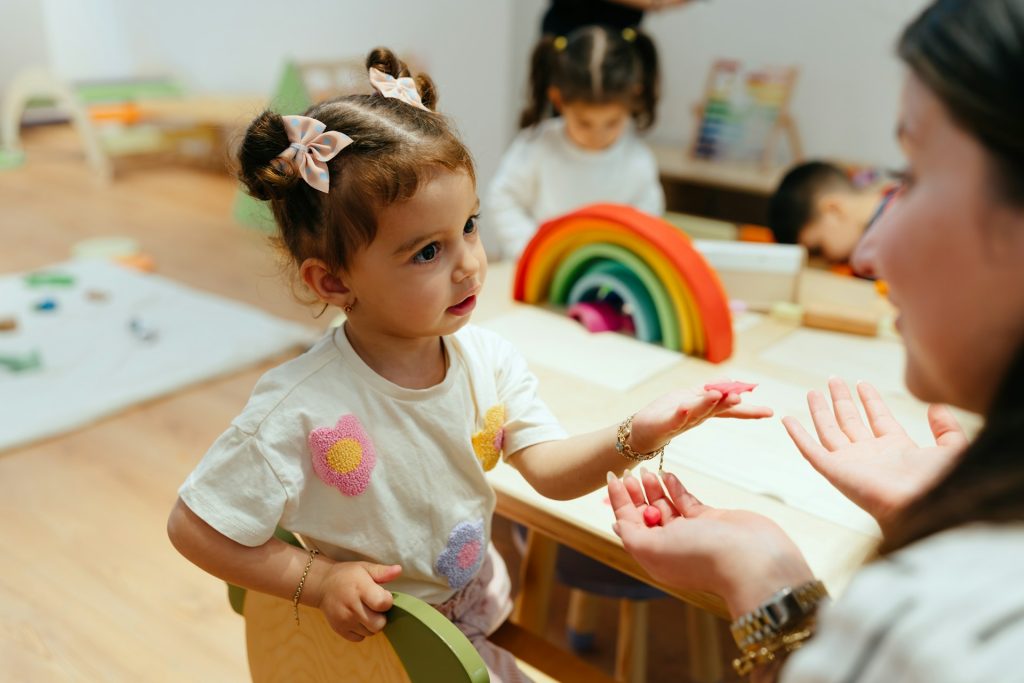
The conversation is already underway
Norland is in active discussion with a small group of partners to build regional capacity for British nursery education. The model is deliberately not a franchise. It is a premium partnership network, built on exclusivity by territory, because that is what protects both a partner’s commercial position and the integrity of the standard itself. The gap may be in the process of closing,
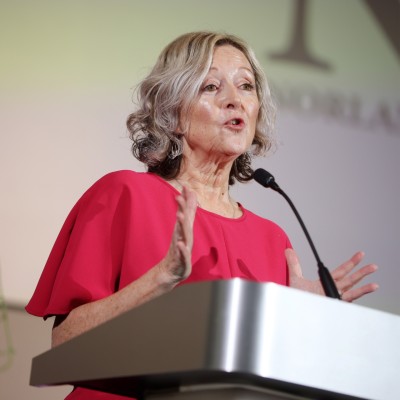
Mandy Edmond is Vice Principal, Head of Enterprise and Strategic Partnerships at Norland
You can meet Mandy Edmond at IPSEF Global London, 2026 on Wednesday June 24th.

Andrew Elias is the International Business Development Lead, Norland
FEATURE IMAGE: by Alexander Dummer on Unsplash
Support Images: by Getty Images For Unsplash+, & Yunus Tuğ For Unsplash+
