
CLOSING THE GAP
Cinde Lock wants learning to take place outside school walls – not just as a short-term project, visit or expedition, but as a long-term commitment in the core curriculum.
Why connection must come first in learning
For years, we have talked about the importance of connecting students to the real world. We’ve built units around inquiry. We’ve layered in project-based learning. We’ve designed experiences that are meant to feel relevant and engaging.
And yet, if we are honest, school and the real world are still far apart.
In many classrooms, the work students do has little consequence beyond the gradebook. The audience is the teacher. The purpose is compliance. The problems are tidy and easily solvable. Meanwhile, outside of school, the world is anything but tidy. It is complex, urgent, and deeply human. The gap between these two worlds is a widening divide. And despite our best efforts, many of the structures we’ve put in place have not shifted the daily experience of students in a meaningful way. We have added projects, but we have not fundamentally changed where learning begins. That is the problem.
The CAP Method of Education starts by challenging that starting point.
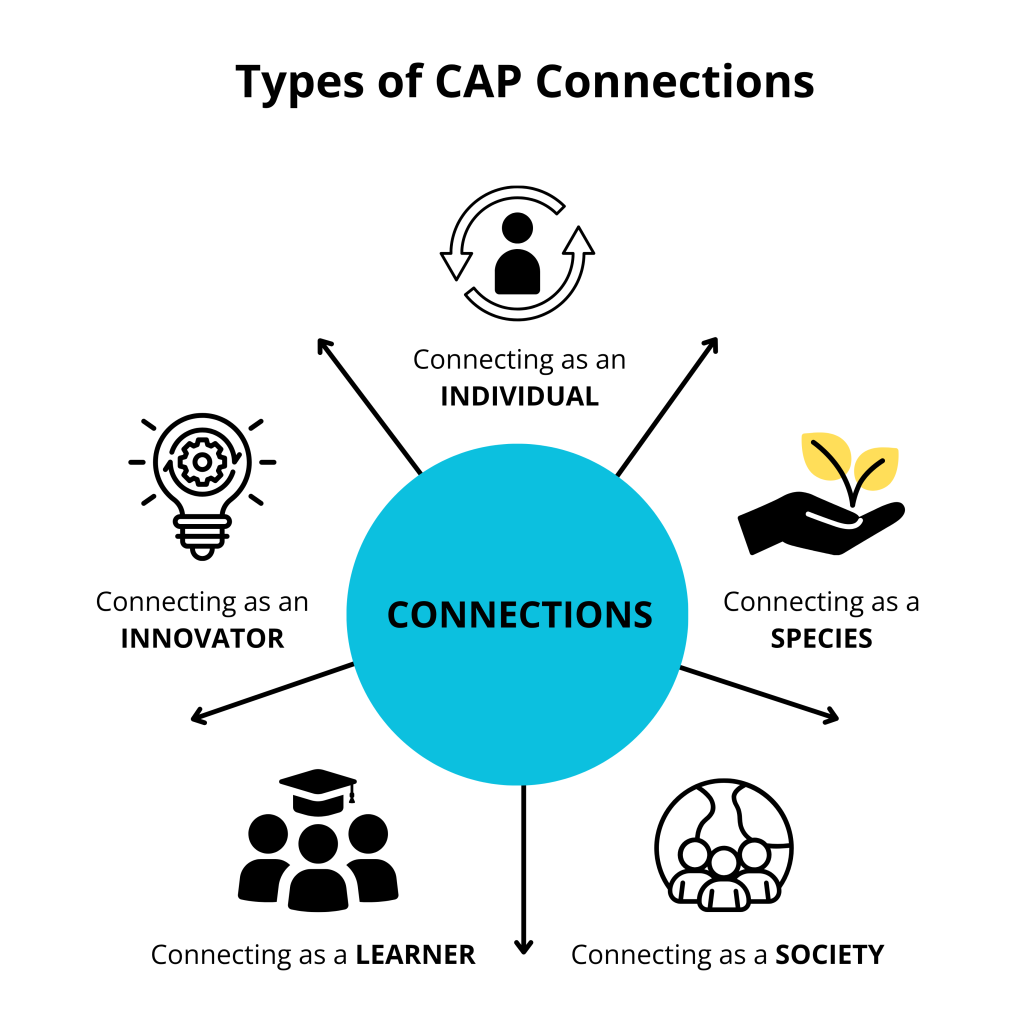
The CAP Method of Education
Instead of beginning with curriculum expectations and planning backward to assessments, CAP asks teachers to begin somewhere else entirely. It asks us to start with connection.
Not connection as an add on or as a hook at the beginning of a lesson, but connection as the foundation for the learning itself.
- Who are we working with?
- What real problem are we trying to understand or solve?
- Why does it matter?
Only once those questions are clear do we turn to the curriculum. Rigorous academics are still there, but they are embedded into something that already has meaning. This is a fundamental shift in thinking.
In most classrooms, we begin with a decontextualized set of outcomes. We ask, “What do students need to learn?” Then we design assessments to measure that learning. Only after that do we try to make it engaging or relevant. In CAP, we begin by asking, “Where is the real work?” Then we build the learning around it. The difference is subtle on paper. In practice, the change is profound.
When students are working alongside real people on real issues, the energy in the room shifts. The work becomes less about finishing an assignment and more about contributing something of value.
Real-world partnerships
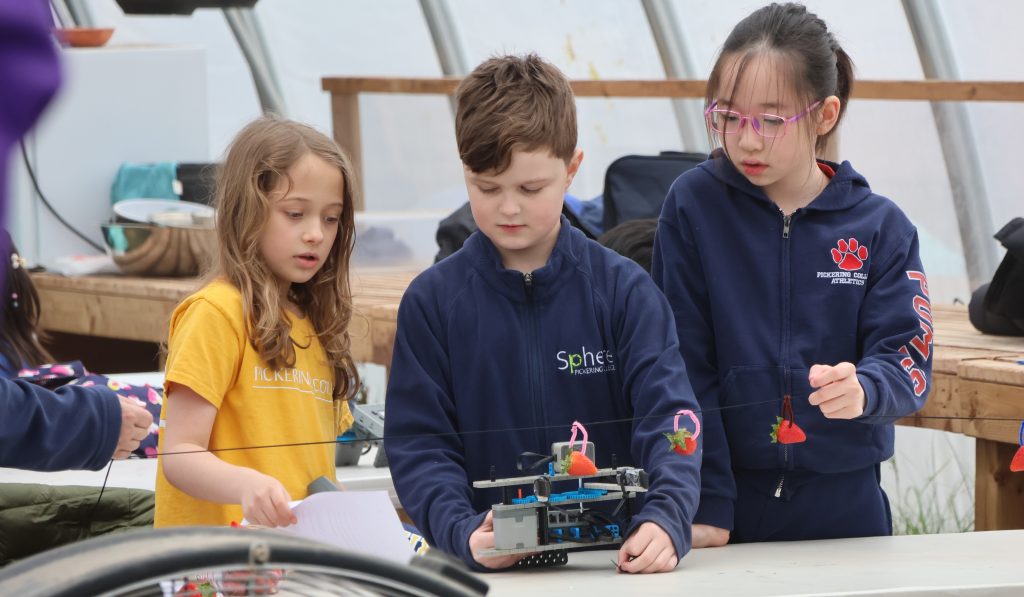
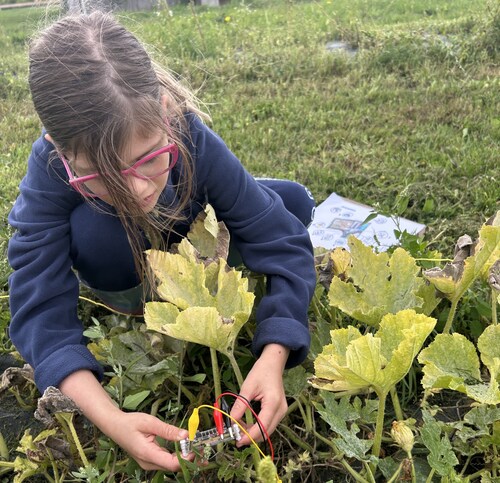
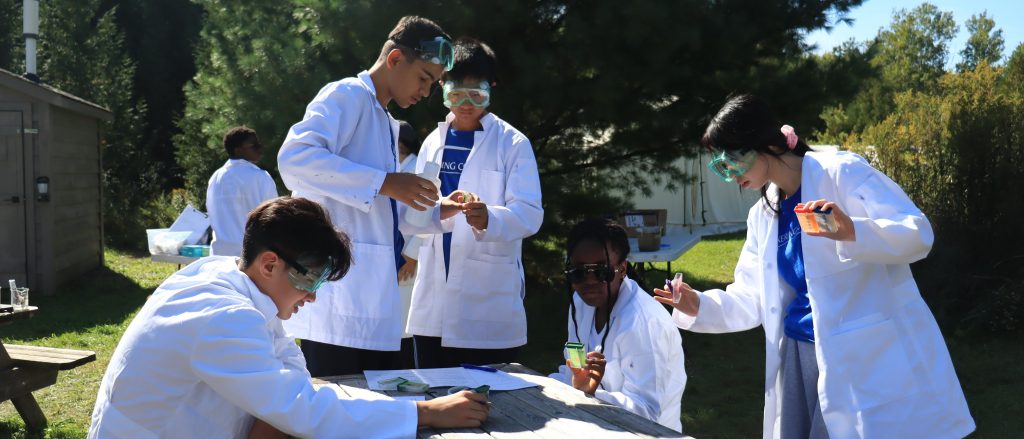
Students at Pickering College in Toronto have designed and built tactile games in partnership with the Canadian National Institute for the Blind. They have supported a start-up company focused on service dogs, developing branding, marketing materials, and early-stage design ideas that the company could actually use. They have worked with the local police to co-create programs that enhance student safety in malls. They have engaged in farm-to-table programs, lobbied for change with politicians, and addressed issues related to fast fashion, cybersecurity, and creating healthy waterways, among many others.
These are not enrichment activities. They are core activities within school, through which students demonstrate their learning of the curriculum.
Through this kind of work, students begin to see themselves differently. They are not just recipients of knowledge. They are contributors. They are problem solvers. They are people whose ideas can matter now, not someday in the future.
This matters more than we often acknowledge.
Breaking the cycle of disengagement
We are seeing increasing levels of anxiety and disengagement among young people. At the same time, we are asking them to spend large portions of their day doing work that feels disconnected from anything that matters to them or to the world around them. Being involved in tackling real issues in society and being truly connected within the world changes that.
When students see the impact of their work, even in small ways, something shifts. They begin to understand that they can influence the world around them. That sense of agency is powerful. It builds confidence. It builds hope. And it begins to shape a sense of purpose.
Purpose is not something we can assign to students. It is something they discover. But it does not emerge in a vacuum. It grows out of experiences where students are engaged in meaningful work, alongside other people, in contexts that matter.
Assessment
At the same time, we are at a moment when technology can finally support this shift in a meaningful way. For years, assessment has been the barrier. How do we track learning when students are doing different work, with different partners, in different contexts?
Emerging tools are beginning to solve this. They allow us to capture evidence as it happens, track growth over time, and make learning visible and transparent. When used well, technology does not replace human connection. It strengthens it. Learning can be tracked individually, one curriculum standard at a time. Students show evidence through their work and engagement and teachers validate that learning. This is where rigour holds. Not in the task, but in the depth of understanding.
This is the opportunity in front of us.
Schools as community hubs
If we continue to treat learning as something that happens within the walls of a classroom, we will continue to see that divide widen. If we begin to position schools as hubs of community, places where students and adults work together on real challenges, we start to close that gap.
The CAP Method offers a structure for doing this in a deliberate way.
Start with Connection. Embed the Academics. Allow Purpose to emerge.
It sounds simple but it is not easy. It requires teachers to plan differently. It requires schools to open their doors and build partnerships. But the alternative is to continue refining a model that we already know is not working for too many students. If we want young people to feel grounded, engaged, and hopeful about their future, we need to give them opportunities to do work that matters.
And that begins by closing the gap between school and the real world, one connection at a time.

Dr. Cinde Lock is Head of School at Pickering College, Newmarket, Ontario
Find out more about the CAP method here: https://www.cindelock.com/the-cap-method
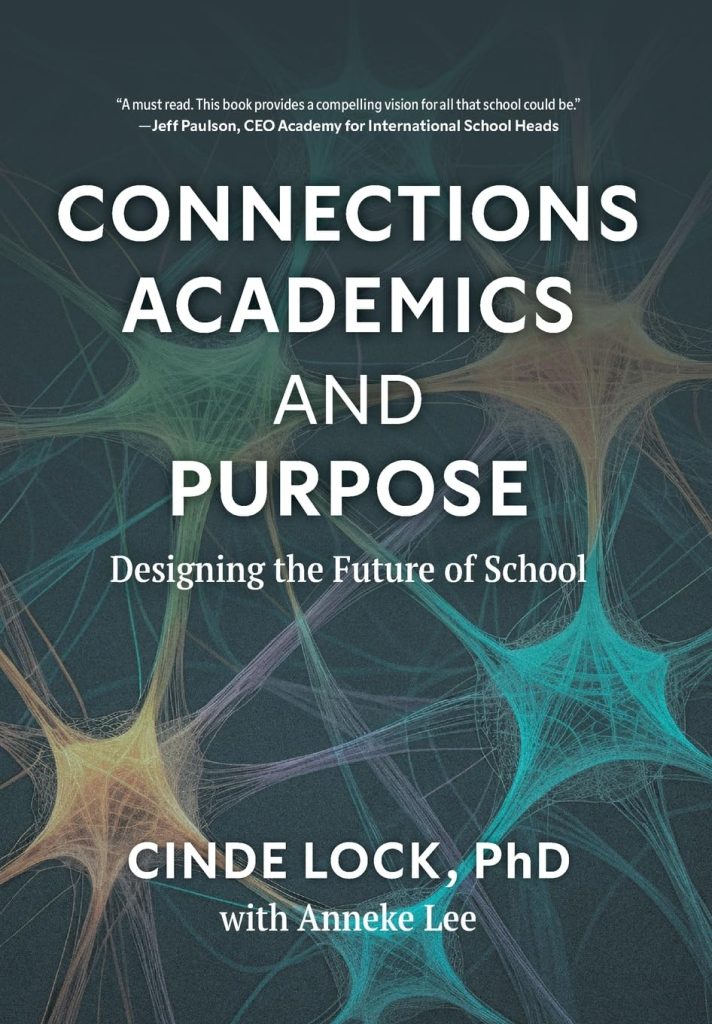
You can order a copy of Cinde’s new book here: https://www.cindelock.com/buy-your-copy
Feature and support images with the kind permission of Pickering College, Ontario
