

WHAT ACTUALLY WORKS
Suzanne Rodgers believes curriculum structure in Art should shape students’ capacity to generate ideas, navigate uncertainty and develop sustained judgement.
Thinking Beyond Outcomes
Across many schools, Art & Design curricula are vibrant. Rooms are busy and full of activity. Students draw, paint, experiment with materials and explore artists; classrooms are engaged, sketchbooks are full, and outcomes are often highly accomplished. On the surface, the subject appears to be thriving, particularly where work is technically impressive.
What is most visible, however, is not always the most meaningful indicator of thinking. A more complex question sits just beneath that surface: to what extent are students developing the capacity not simply to produce work, but to generate ideas, navigate uncertainty, make informed decisions and sustain those decisions over time?
Technical proficiency does not in itself indicate that students can think in this way. Students may demonstrate control and refinement, yet remain dependent on direction, unsure how to initiate or redirect their thinking when structure is removed. What becomes clear in the classroom is how students behave when work is unfinished – whether they stay with uncertainty, return to ideas, or wait to be directed. Where these capacities are not deliberately constructed, a subtle pattern emerges – students become skilled at responding to prompts, yet less secure in directing their own enquiry. They learn how to produce outcomes, but not always how to generate, evolve and sustain ideas independently.
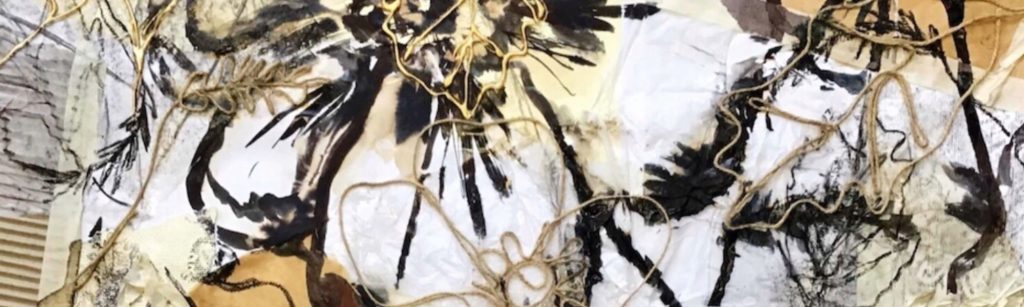
Progression and accumulation
Progression in Art & Design is often framed around increasing technical skill, widening material knowledge and producing more refined outcomes. Each has value, yet none explains why some students arrive ready to work independently while others remain reliant on teacher direction. The difference is not simply skill, but judgement. Students can become practised in following processes and applying techniques, but independent practice requires something more demanding: the ability to make decisions, recognise when something is working, adapt when it is not, and sustain an idea over time. Strong curricula design for this from the beginning. This reflects a broader shift in how learning is understood, where thinking develops through process, iteration and decision-making rather than through the production of outcomes alone.
From performance to judgement
This can be understood as curriculum as the construction of agency. Curriculum is not simply a sequence of projects, but the structure through which students develop the capacity to make informed, purposeful decisions. Agency is not confidence or risk-taking; it is cognitive responsibility – understanding why choices are made, how materials influence outcomes, and how ideas evolve over time.
Where independence actually begins
Independence depends on when and how decision-making is introduced. In the early years of secondary education, this may involve choosing between compositional options or selecting materials within defined parameters. Over time, these decisions are revisited and extended so that independence is built gradually rather than introduced suddenly. When independence is left until formal examination courses, it often remains fragile, but when constructed from the outset, becomes far more secure. When structured carefully, the shift is noticeable: students work with greater independence, sustain ideas more confidently, and rely less on step-by-step direction. When decision-making is introduced earlier, students become more willing to test alternatives and work with less reassurance.
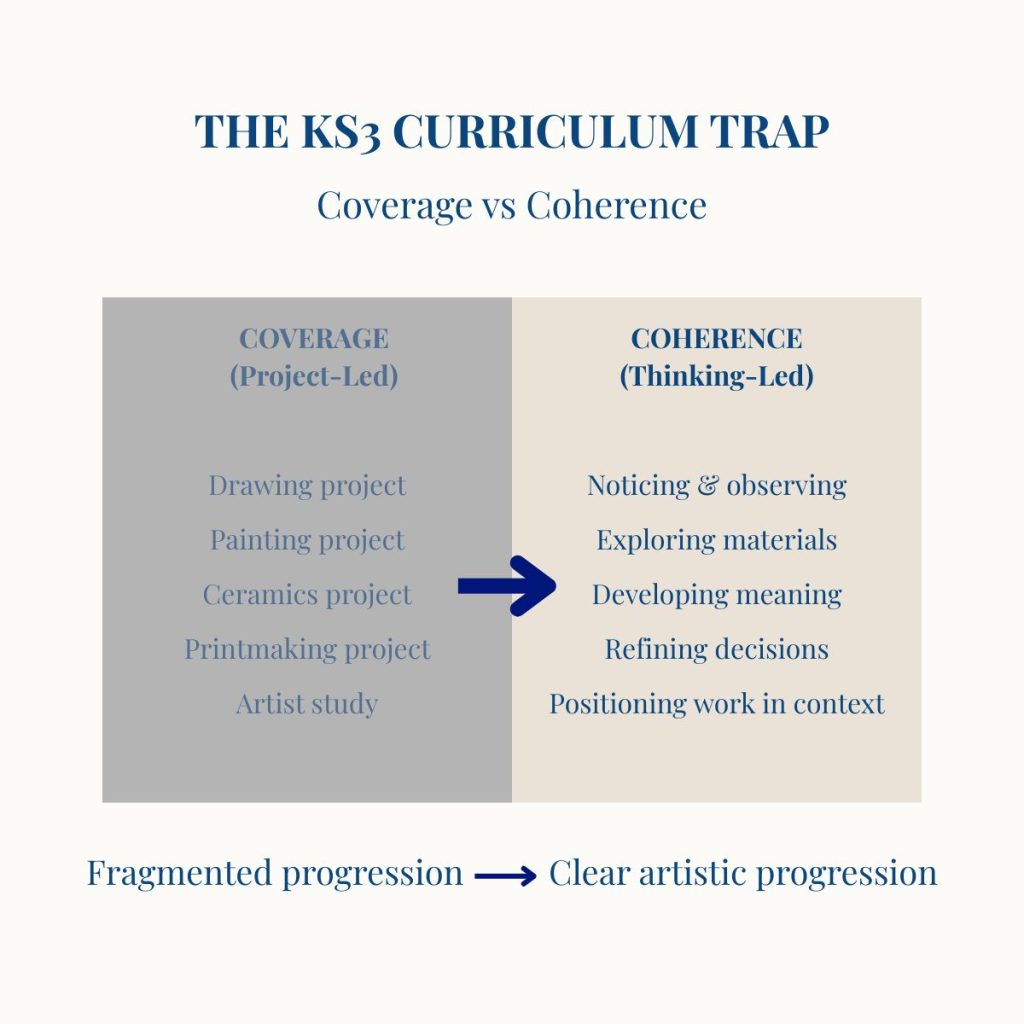
Structure builds thinking.
The difference between coverage and coherence is critical. Many curricula prioritise breadth, moving students through a sequence of projects that introduce new materials, artists or themes. While this creates variety, it can also lead to fragmentation, with students experiencing many activities without understanding how ideas connect or develop. Coherent curricula take a different approach. Rather than organising learning around projects, they are structured around the development of artistic thinking. Students return to key ideas repeatedly, each time with greater depth and independence. For example, instead of encountering printmaking once, students revisit it across contexts, refining control and using it to support increasingly independent ideas. Progression becomes visible not through the number of projects completed, but through the increasing sophistication of thinking.
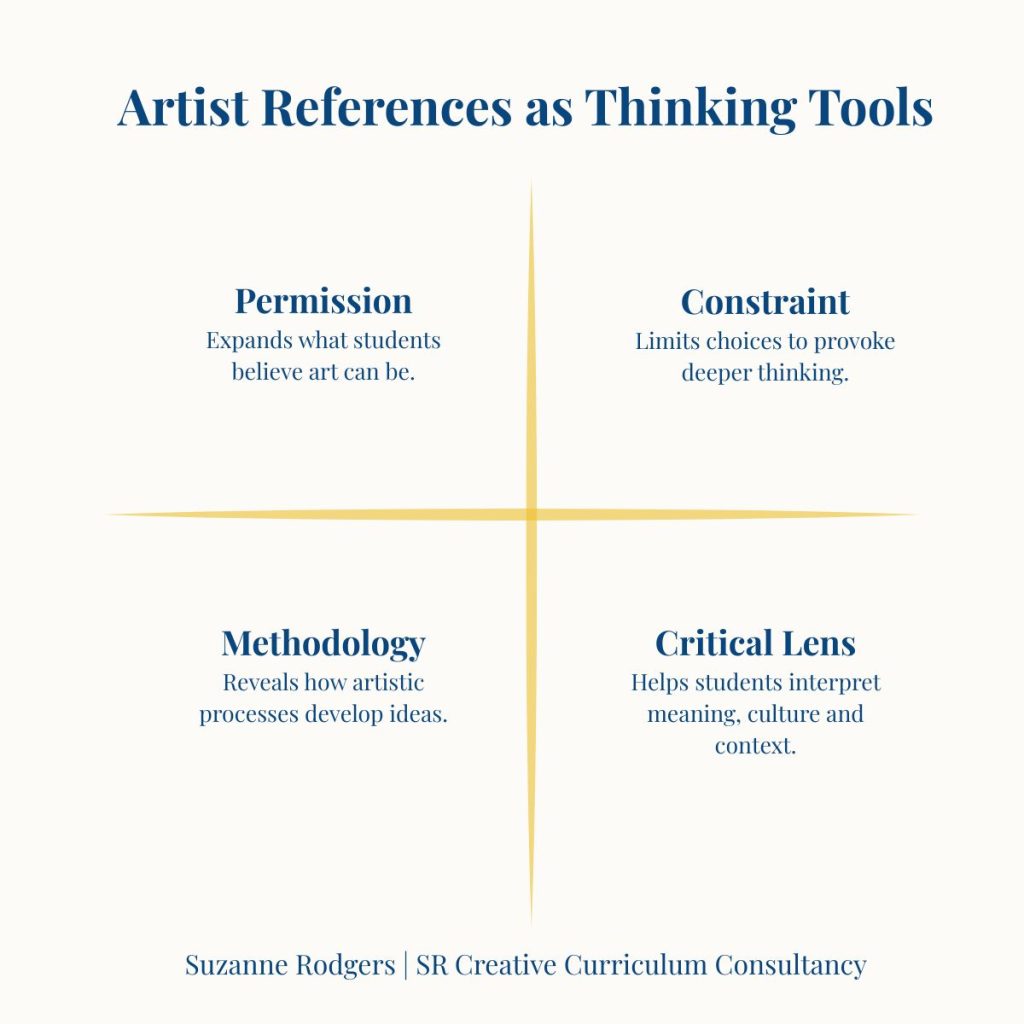
Artist references
Artist references also take on a different role. Rather than functioning as examples to replicate, they operate as thinking frameworks that shape how students work. They expand what is possible, introduce constraint, model process and provide a lens for meaning. In my work with schools in the UK and internationally, this consistently leads to a wider range of outcomes, more purposeful annotation and reduced dependency on teacher validation. Artist references become part of the architecture of learning itself.
How strong curricula quietly differ
Strong Art & Design curricula share a consistent structural pattern. Students move from exploration towards direction, with early experiences emphasising curiosity and material engagement, and later stages focusing on intentional decision-making and sustained development. Over time, this becomes visible in the work students produce. They generate and select ideas more confidently, refine work independently and sustain lines of enquiry with greater clarity. The real curriculum becomes visible not in documentation, but in the decisions students make and how those decisions evolve. In coherent curricula sketchbooks reveal developing ideas rather than recorded activity, and students articulate their thinking with increasing precision.
A question for curriculum leaders
For schools reviewing Art & Design provision, a useful starting point is this: at what point does a student first make a genuine artistic decision, and how is that decision revisited and strengthened over time? Strong curricula are not built by adding more, but by clarifying what matters and sequencing it carefully. When that structure is secure, independence is no longer something we hope for, but something deliberately built.
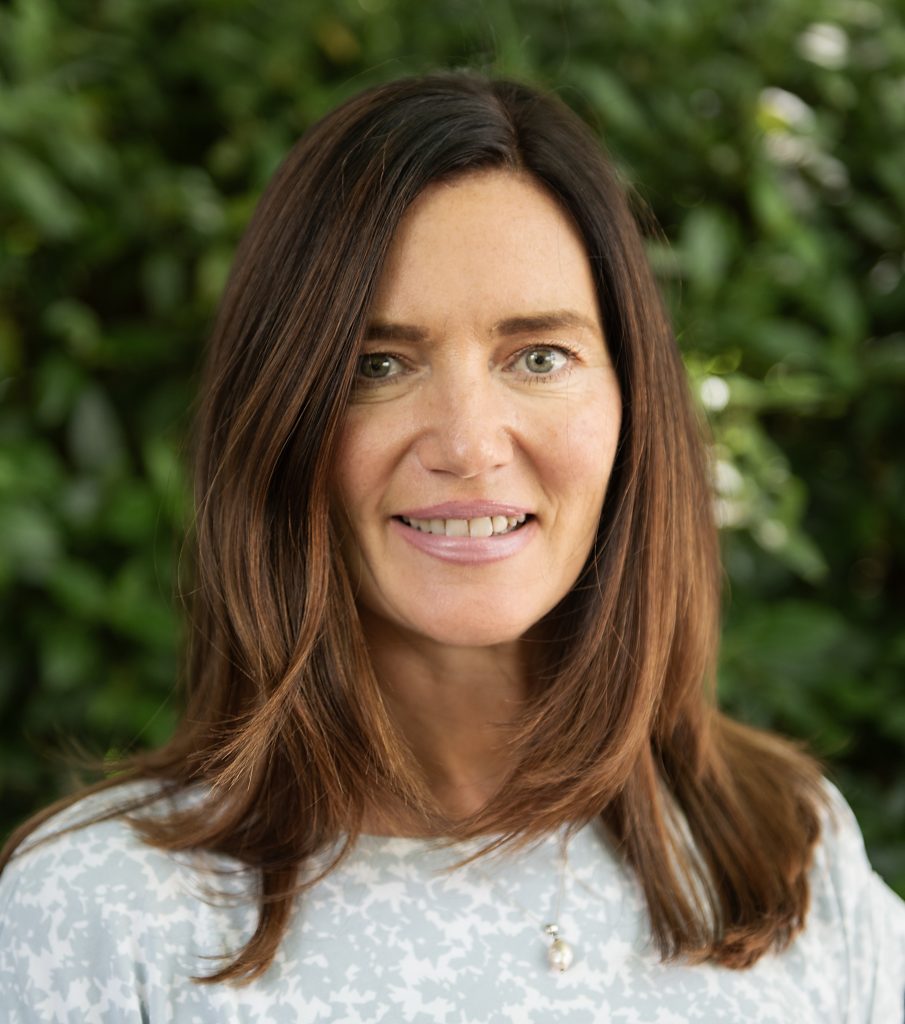
Suzanne Rodgers is the founder of SR Creative Curriculum Consultancy, working with schools across the UK and internationally to design Art & Design curricula that prioritise thinking, independence and progression over time. A former subject leader with over 25 years’ experience, she specialises in helping departments move from project-led models to coherent, thinking-led provision.
Website: www.srcreativecurriculum.com
Contact: suzanne@srcreativecurriculum.com
FEATURE IMAGE: by Polly T on Unsplash Celebration art concept with eye
Support Images: kindly provided by Suzanne
Images © Suzanne Rodgers / SR Creative Curriculum Consultancy. All photographs taken with consent for educational and professional use. Permission is granted for publication by International Teacher Magazine and associated promotion.
