
Revealing careers pathways
Naotka Ikebe continues his series of articles about careers education in Japan, suggesting that a school’s culture of belonging is the key to revealing career pathways.
Peer relationships
Elsewhere in ITM, I have described how career education in Japan lives not in formal counselling programmes, but in the culture of the school itself — in peer relationships, club activities, and the shared challenge of events like the large-scale sports festivals organised by the students themselves. I suggested that the qualities this culture develops — empathy, resilience, the courage to take the harder path — are precisely those that AI cannot replicate when students wish to identify an appropriate career pathway for themselves.
But a question remained unanswered: if this culture already exists, why is it not more widespread? And what can schools do — deliberately, structurally — to cultivate it?Three memories from my time at Shonan High School in Kangawa Prefecture, near Tokyo suggest an approach wherein some answers might lie.
Three memories
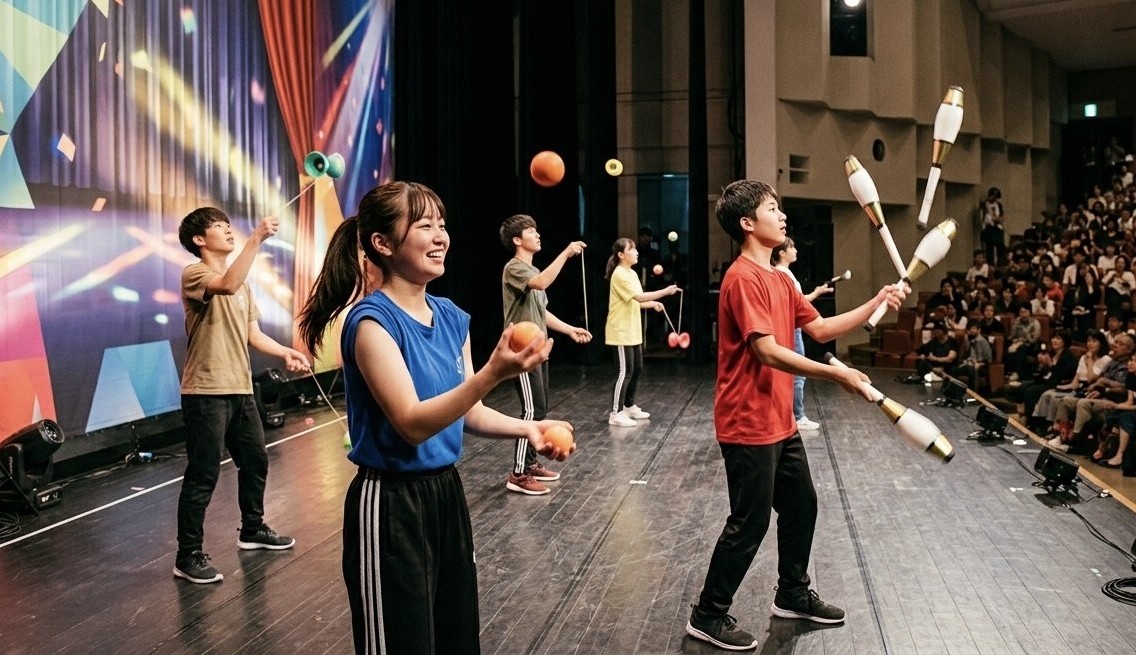
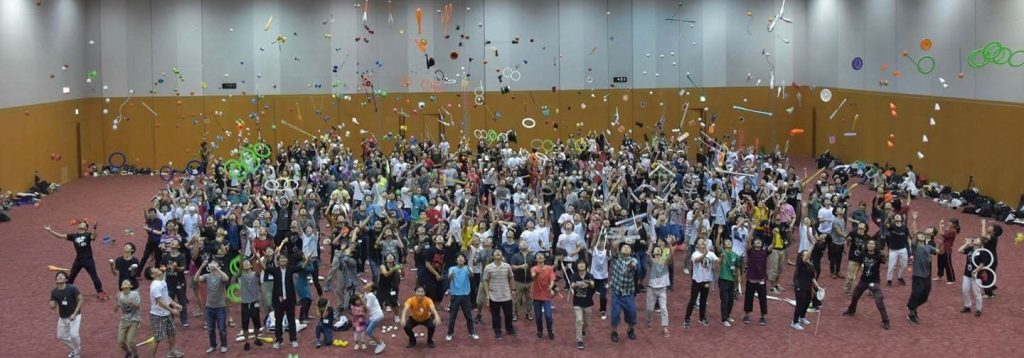
In 2010, the members of Shonan High School’s juggling club created something that did not yet exist: a national high school juggling competition, the Japan Students’ Juggling Festival. Noticing that no such competition existed for high school students, they researched juggling clubs across Japan, sent out invitations, secured sponsorship, and organised the first event themselves. The competition has since grown, with students from other schools joining the regional organising committee, and it continues to this day. At the 2023 competition — the final year of my time as principal at Shonan HS, — a professional judge, invited by the students themselves, said at the closing ceremony:
“From this morning until now, I have only been in meetings with high school students. This entire event has been run by their hands.”
He was not praising them. He was simply stating a fact. And that, I think, is the highest form of praise.

The second event I particularly recall was when students campaigned for the school’s electricity to be switched to renewable energy. Kanagawa Prefecture subsequently made that change. The students did not just simulate change. They made it happen.

My third memory is of the COVID-19 pandemic, when two students developed a QR code entry management system for the school’s cultural festival — entirely on their own initiative. The system successfully prevented crowding at all venues throughout the event. On the day of the festival, those two students became heroes. Not because the school asked them to solve the problem. Because they saw the problem and acted.
What these three episodes show is not necessarily talent. It is ownership — the felt sense that;
“this is my world, and I have a responsibility within it.”
And it involves a sense of belonging — the knowledge that;
“there are people here who see me, and with whom I can act.”
School should be a place that feels as fascinating and massive as the entire world to a child. And a student’s sense of belonging is, at its core, a sense of connection.
How do we create those conditions deliberately?

Career Construction Interviewing
The answer. I believe, lies in the use of a technique that has become known as Career Construction Interviewing or ‘CCI’ — an approach developed by Mark Savickas.
This year, at Seikei University, I used the technique to conduct peer support sessions for undergraduate students. The energy in the room was remarkable. Students who had never spoken deeply with each other found themselves sharing stories, discovering unexpected connections, and articulating — perhaps for the first time — what truly mattered to them.
CCI asks each person to tell their own story: to find the thread that connects their past experiences to their future direction. In a peer setting, students do this for each other. The result is not merely a career plan. It is the experience of being genuinely heard — and of genuinely hearing another person.
CCI: a possible high school approach
I came away from those sessions at Seikei with a clear conviction that this approach can be implemented with high school students. The questions are accessible. The process is human. And the outcomes — in terms of self-awareness, connection, and sense of purpose — are profound.
For high schools, I envision a model of peer counselling rooted in CCI: students trained not as therapists, but as listeners — people who know how to ask the questions that help another person find their own story. This is not a replacement for professional guidance. It is the living culture of mutual support, made intentional.
If students have been prepared as effective listeners as they interact, this kind of peer counselling is really powerful and serves to reveal possible pathways to the future.
Students can of course develop the required listening techniques as high schoolers, but the good news is that they can also learn how to approach the issue when they are younger.
Becoming good listeners
For primary and lower secondary students, the approach needs to be preparatory. Children at this stage of their school lives may not yet be ready to engage in structured peer counselling. But the relational skills that underpin CCI — deep listening, asking open questions, noticing what another person is really saying — can be cultivated through skilled teacher facilitation.
When a teacher learns to facilitate in the spirit of CCI, something changes in the classroom. Lessons become less about delivering content and more about creating space for students to think aloud, to connect, to discover. This is, I would argue, the highest form of active learning — not because it uses the most sophisticated technology, but because it engages the most sophisticated instrument we have: human relationships.
This kind of facilitation, however, requires teachers who have themselves experienced it. It cannot be taught through textbooks alone. It must be modelled, practised, and supported.
Belonging as the priority
A student’s sense of belonging in school is not merely a pastoral add-on. It is not a wellbeing initiative. It is the precondition for everything else we hope education will achieve.
And belonging, at its deepest level, is connection — the experience of being known, valued, and part of something larger than oneself.
When schools are designed around that principle — when peer culture is cultivated deliberately, and when approaches like CCI develop the relational capacity of both students and teachers — something remarkable happens.
Students stop waiting for life to begin. They begin living it.
The question that Shonan HS asks of every student —“How will you change the world?”— is only answerable by a student who believes the world is theirs to engage with. Creating that belief is, I would argue, the first and most important task of any school.
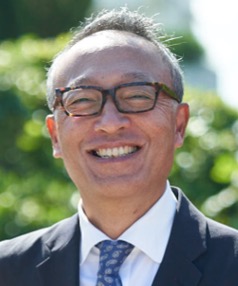
Naotaka Ikebe, a former Principal of Shonan High School, Kanagawa, is currently a Part-time Lecturer, Seikei University, Tokyo, Japan, and a Visiting Professor at the Graduate School of Education, Waseda University, 1-6-1 Nishi-Waseda, Shinjuku-ku, Tokyo 169-8050, Japan
Feature and support images – our thanks to Shonan High School & Seikei University.
Renewable energy by Alex Shuper For Unsplash+
