

A TALE OF TWO SOUL SPACES
Most schools have an art room. A growing number have an atelier. Holly B. F. Warren looks at the importance of both.
Shared resources, different intentions
In a growing number of schools, two creative spaces are quietly shaping the identity of young learners: the art room and the atelier. Though they may share materials, brushes, paper, color, their intentions, rhythms, and pedagogical philosophies diverge in meaningful but complementary ways. Understanding these differences invites us to reflect on how we nurture creativity and agency in our learning environments.
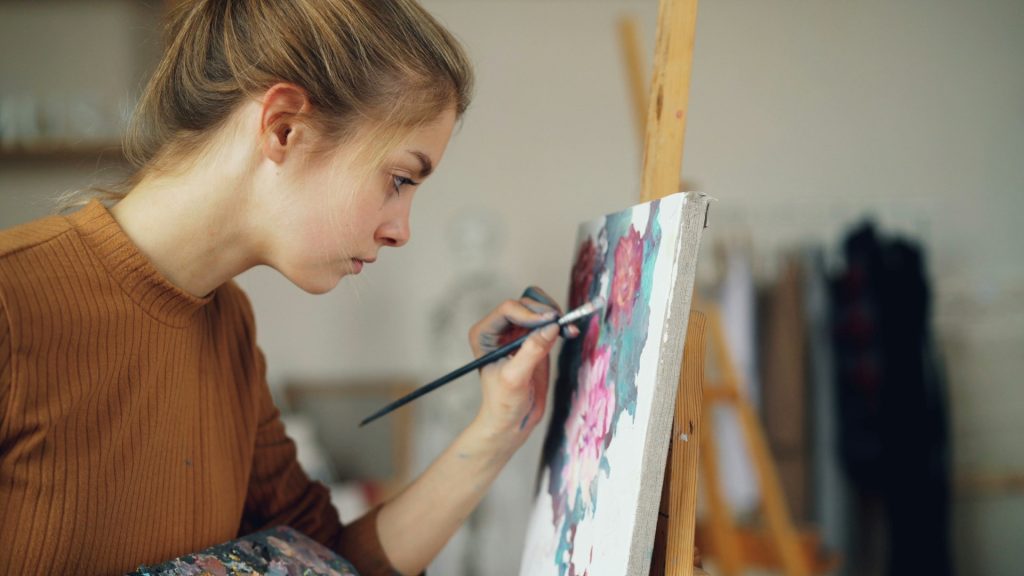
The Art Room: a place for practice and precision
The art room is often a very structured space, designed to teach skills and foster visual art literacy. Tables are arranged with purpose, materials are sorted by medium, and lessons are scaffolded to build techniques. Educators guide co-creators through steps and practices, often culminating in outcomes that reflect milestones advocated in assessments.
Here, students learn the property of colors, replicate styles, and follow instructions. The emphasis is on product, mastery, and alignment with curriculum goals.
Benefits of the art room:
- Builds confidence in tools and techniques.
- Offers clear objectives and measurable outcomes.
- Supports curricular integration and visual mastery.
- Encourages discipline and craftsmanship
Limitations:
- Creativity may be contained within predefined expectations.
- Projects can lean toward uniformity over individuality.
- Emotional expression and metaphor may be underexplored.
- The journey may be overshadowed by the destination.
The art room teaches how to make art from the perspective of assessment and testing. It is an environment of practice, precision, and induced technique, but journeys of wondering may be less valued.
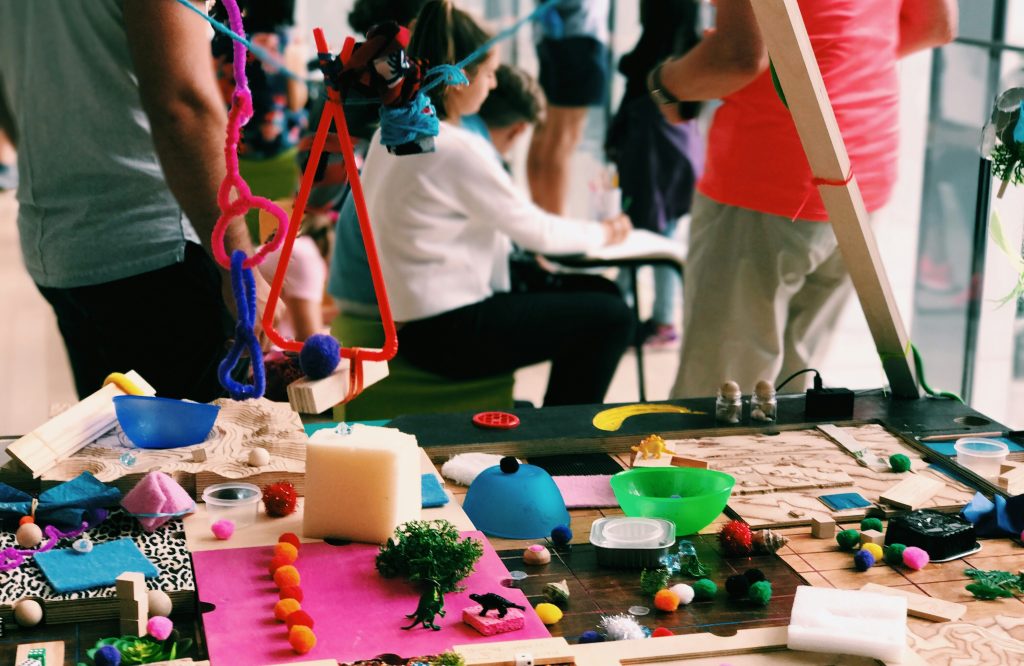
The atelier: a space of inquiry and becoming
The atelier, rooted in the imaginative education philosophy associated with Reggio Emilia, is not merely a room. It is conceived as a relational space of wonder through wandering. It listens. The environment, in which art can be experienced as the drawing out of the inner self, prompts reflection. It stirs, awakens and invites. Materials are not tools, but languages. Paper is not blank, it is waiting. A mark is not a mistake; it is a beginning and where ends are loose, ends of new beginnings.
In the atelier, young people are co-creators, researchers, poets, and cartographers of emotion and narratives. Projects emerge from questions, stories, and shared moments. The process is nonlinear, often seem messy, and deeply meaningful, woven by unique threads of a shared tapestry of connections and knowledge.
Benefits of the atelier:
- Honors process and learning journeys – some to final destinations, and others to meditative stations of further possibilities.
- Fosters emotional literacy and metaphor-rich expression.
- Encourages inquiry, reflection, and collaboration.
- Supports identity formation through creative exploration and imaginative landscapes or – even better – mindscapes.
Limitations:
- Outcomes may be ephemeral and hard to assess in practical ways.
- Requires time, attunement, deep pedagogical knowledge and flexibility.
- Less predictable and harder to standardize.
- Demands deep listening and co-research from educators.
- Unique art resists easy interpretation, reflecting singular minds and revealing beauty through patient attention.
The atelier does not teach art. It invites collaborators to discover themselves through art.
In dialogue, not opposition
These two spaces are not rivals. They are companions in the landscape of learning. The art room offers technique. The atelier offers transformation. One teaches how to hold a brush. The other asks, what does your brush want to say?
Importantly, co-creators should be able to move between these spaces fluidly. A learner may begin in the art room, seeking structure, and drift into the atelier, drawn by wonder. Another may start with metaphor and return to technique to refine their vision. This movement is always in flux and never still. It mirrors the nature of learning itself: alive, responsive, and deeply human.
The art room and the atelier are therefore not opposites but companions. Two spaces that together shape a landscape of learning. One offers practice, discipline, and technique; the other invites inquiry, metaphor, and transformation. As these spaces continue to evolve, and however many spaces a school has, we are invited to imagine a hybrid environment in which imagination, creativity, technique, assessment, and freedom of expression meet, reflecting the different contributions the art room and the atelier both make to learning.

FEATURE IMAGE: by laura adai on Unsplash
Support images: by Vitaly Gariev on Unsplash , Emily Webster on Unsplash , Gabiee Arboleda on Unsplash & Al Soot on Unsplash
