

Mark Beverley, Director of the Institute of Teaching and Learning at Sevenoaks School looks at the theory and practice of intrinsic motivation.
Enrichment week
At the end of each academic year, our students are taken off timetable and invited to participate in an ‘Enrichment Week’ set of activities. A key aim of the week is to focus attention on the idea of ‘meaning and purpose’ as a core element of human flourishing (Vandevelde, 2017) and the ways in which learning actively can (or should) reflect a set of clear values.
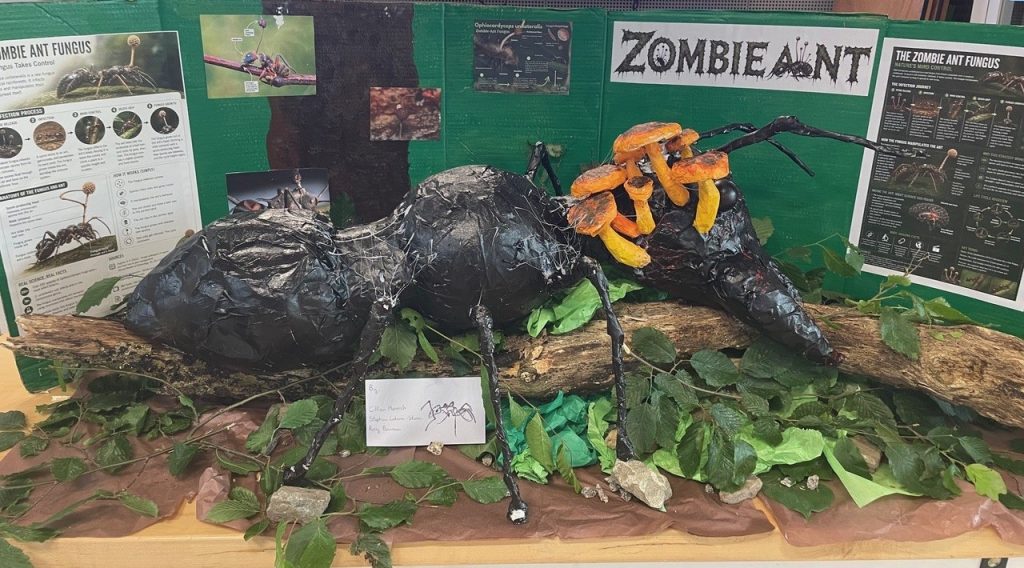
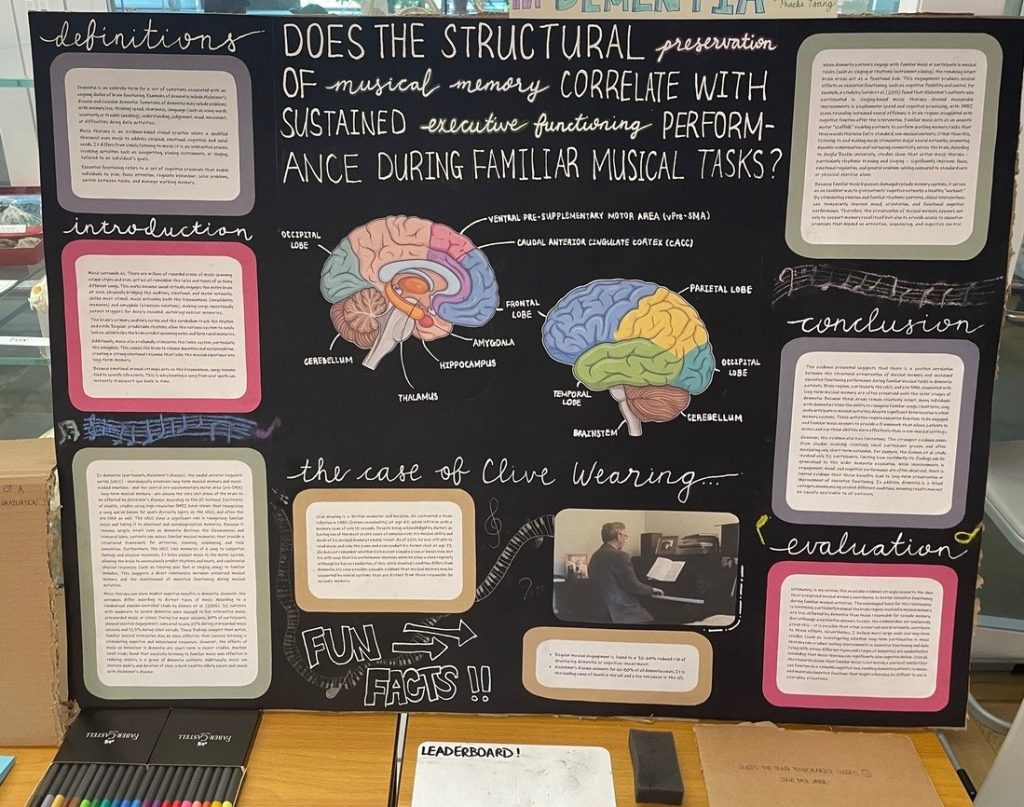
One of the activities, undertaken by Year 10 students, is a 3-day Independent Research Project. Students are invited to select a topic in which they have a burgeoning interest, to engage in careful research about it, and work towards a final exhibition in which both the topic and their sense of engagement with it are represented imaginatively.
It is, in a sense, a kind of taster that looks towards the Extended Essay, undertaken two years later as part of the IB Diploma. However, beneath this quite practical goal lies a deeper component, one that takes advantage of the opportunity to think about learning outside the context of prescribed curricula; the activity highlights, for example, the value of learning for its own sake and the infectious impact that can come from the simple pleasure of ‘finding things out’. The projects serve as a reminder that learning can often carry the most impact when students find themselves deliberately and purposefully involved in it, when they recognise that independent choice and a sense of agency are not add-ons to serious study but the very conditions that make it stick.

Extrinsic vs. intrinsic motivation
Developed and refined through the 1970s and 80s, Self-Determination theory (Ryan & Deci, 2017) shows that we can think of motivation in terms that are extrinsic and intrinsic. In education, extrinsic motivation is manifest in students who focus on the attainment of performance-related status, for example in test and examination grades; this approach tends towards experience of test anxiety, superficial learning and a lower level of achievement. (Santana-Monagas et al.,2025) Intrinsic motivation describes the feeling of satisfaction that can come from activity that is seen as inherently interesting, enjoyable or meaningful.
“…students who adopt learning rather than performance goals are focused on learning, mastering the task, understanding, and trying to accomplish something that is challenging.” (Fredricks, et al., 2004)
Causal feedback loop
A recent study put forward by Murayama and colleagues “explains long-term voluntary engagement as a causal positive feedback process that surrounds the rewarding value of information, knowledge structure, and information-seeking behaviour.” The framework suggests a structure as follows:
- Learning behaviour is motivated by awareness of knowledge gaps
- The acquisition of knowledge produces a feeling of reward and promotes further knowledge-seeking behaviour
- New questions about the topic are opened up, which increase the value of knowledge about it, as well as the ability to understand new information. (Murayama & Keyserlingk 2026)
Among the implications of this feedback loop, as suggested by Hendrick (2026), is that when a student learns something new, we should help them to see new questions that arise, how this makes their existing knowledge more valuable and enables them to understand more complex ideas.
Learning independently, not in isolation
Autonomous motivation does not mean allowing students to learn by themselves. Students need to receive guidance and instruction, constructive feedback, and appropriate scaffolding, just as they would in any context that prioritises achievement. The Year 10 projects are, for example, punctuated with research-informed talks and workshops on connected ideas – including what it means to learn independently, how to research, how to work collaboratively, the meaning of ‘flow’ (Csikszentmihalyi, 2002) and how to curate knowledge for a target audience.
The self-motivation trifactor
Self-determination theory finds that independent motivation can be fostered in three fundamental ways (Ryan & Deci, 2017):
Autonomy – providing a sense of choice and agency i.e. considering where students might be given some sense of choice over what or even how they learn. For example, in the decision about which literary text to study, having more than one option for a homework task or allowing them to choose the format for their assignment – an essay, a podcast or a presentation.
Competence – and the development of mastery: the careful use of formative feedback, teaching pitched in the ‘zone of proximal development’ which balances ability and challenge in an appropriate way, and the development of reflective practices that foster metacognition.
Relatedness – the cultivation of a sense of belonging and of purpose. Evident in the way classrooms feel safe and students feel recognised. Strategies that promote a feeling of belonging might include the use of humour (Sandling, 2020), talking about why a particular learning activity is being used, promoting interpersonal connection within classroom discussion and peer to peer support.

Motivation in the examined years
Even though many schools will experience a degree of curricular freedom in lower years of secondary education, teachers inevitably feel more constrained by the demands of GCSE, A Level or IB syllabi. But the presence of prescribed course content and the demands of assessment tasks do not rule out practices that continue to develop student autonomy.
Framing lessons or units of work in terms of key questions that need to be answered, seeking personal or ‘real world’ connection and placing emphasis on the means as much as the ends of learning are just three examples. There is no shortage of evidence for the efficacy of teaching metacognitive approaches and, to this end, over the last few years at Sevenoaks School, we have placed significant emphasis on self-directed learning. This has meant teaching students about what learning is, how it happens and how to self-diagnose practices that are more or less effective. The aim is to develop a culture in which students see themselves as active participants in the learning process.
The three domains of self-determination theory, suggest that autonomy emerges in ways that are affective as much as cognitive, inter-personal as well as personal. This means that taking account of the ways it can be fostered through pastoral and co-curricular programmes, might play a large role in the recognition of an education that is about a lot more than passing exams, and one in which students (as well as teachers) can see deeper meaning and purpose. Examples of current, associated initiatives for us centre on the further recognition of the power and importance of the Arts – and by extension, Humanities subjects; in the development of independent reading; in work on character education and the evolution of a curriculum in which taught and ‘hidden’ elements speak to each other more deliberately.
Whilst school contexts are obviously all very different, engaging in research can generate new perspectives, opening opportunities to exchange views or collaborate on projects. Our door is certainly very open to this possibility.

Mark Beverley is Director of Institute of Teaching and Learning at Sevenoaks School. His full article can be read in the school’s most recent academic journal, Innovate VIII, which is available to read here.
FEATURE IMAGE: by DrAfter123 on iStock
Support Images: by ghariza mahavira For Unsplash+, Enrichment Week Activities and Peer Support kindly provided by Sevenoaks
References
- Csikszentmihalyi, M., Flow: The Psychology of Happiness (Rider 2002)
- Eccles, J. S., & Wigfield, A. (2020). From expectancy-value theory to situated expectancy-value theory: A developmental, social cognitive, and sociocultural perspective on motivation. Contemporary Educational Psychology, 61,Article 101859. https://doi.org/10.1016/j.cedpsych.2020.101859
- Elliot, A. J., & Hulleman, C. S. (2017). Achievement goals. In A. J. Elliot, C. S. Dweck, & D. S. Yeager (Eds.), Handbook of competence and motivation: Theory and application(2nd ed., pp. 43–60). The Guilford Press.
- Everaert, P. , Opdecam, E. , & Maussen, S. (2017). The relationship between motivation, learning approaches, academic performance and time spent. Accounting Education, 26(1), 78–107.
- J.A., Blumenfeld, P.C., & Paris, A.H., School Engagement: Potential of the Concept, State of the Evidence Author(s): Review of Educational Research, Vol. 74, No. 1 (Spring, 2004), pp. 59-109
- Hendrick, C. Why Motivation Theories in Education Haven’t Changed in Decades (And Why It Matters for Schools) 2025 https://carlhendrick.substack.com/p/why-motivation-theories-in-education
- Murayama, Kou & Fitzgibbon, Lily & Sakaki, Michiko. (2019). Process Account of Curiosity and Interest: A Reward-Learning Perspective. Educational Psychology Review. 31. 10.1007/s10648-019-09499-9.
- Murayama, K., & von Keyserlingk, L. (2026). A critical analysis of the current motivation theories in educational psychology: Why the same theories continue to dominate. Educational Psychologist, 61(1), 19–34. https://doi.org/10.1080/00461520.2025.2473894
- Reeve, Johnmarshall. (2009). Why Teachers Adopt a Controlling Motivating Style Toward Students and How They Can Become More Autonomy Supportive. Educational Psychologist – EDUC PSYCHOL. 44. 159-175. 10.1080/00461520903028990.
- Richard M. Ryan and Edward L. Deci, Self-Determination Theory: Basic Psychological Needs in Motivation, Development, and Wellness (Guildford Press, 2017)
- Sandling, J., Humorous Learning Cultures, 2020 https://my.chartered.college/impact_article/humorous-learning-cultures/
- Santana‐Monagas, E., Núñez‐Regueiro, F., & Núñez, J. L. (2025). Does motivation lead to academic success, or conversely? Reciprocal relations between autonomous and controlled motivation, and mathematics achievement.British Journal of Educational Psychology, 95(2), 513–529. https://doi.org/10.1111/bjep.12736
- Urdan, T., & Kaplan, A. (2020). The origins, evolution, and future directions of achievement goal theory. Contemporary Educational Psychology, 61,Article 101862. https://doi.org/10.1016/j.cedpsych.2020.101862
- VanderWeele, T.J., On the promotion of human flourishing, Proc. Natl. Acad. Sci. U.S.A. 114 (31) 8148-8156, https://doi.org/10.1073/pnas.1702996114 (2017).
- Vollmeyer, R. , & Rheinberg, F. (2000). Does motivation affect performance via persistence? Learning and Instruction, 10(4), 293–309
