

ADDRESSING THE SMARTPHONE PROBLEM
Mark Beverley, Director of the Institute of Teaching and Learning at Sevenoaks School discusses the development of a year-long initiative to ban smartphones in the Lower School and offer alternative ‘brick’ non-smartphones.
Common sense tells us that smartphone usage and excessive screen time are having a negative impact on students’ learning, as well as their general wellbeing. A significant factor in the development of this view is the widespread influence of Jonathan Haidt’s “The Anxious Generation” and there is plenty of evidence that supports this negative correlation.
The case for action
One study showed that at tertiary level, students who were permitted the use of mobile phones in lectures were less able to recall information long term and performed 5% worse in exams (Glass and Kang, 2018). Another study found that every 100 minutes spent on a mobile phone during any single day, reduced students’ positions in the school’s academic ranking by 6.3 points (Felsoni et al. 2018).
In terms of mental health, unsurprisingly research links problematic smartphone use with both depression and anxiety among teens (Carter et al. 2024). Mental distress, self-injurious behaviour and cyber-bullying have all been shown to correlate with social media interaction (Abi-Jaoude et al. 2020). A 2021 Meta study provides extensive evidence that overuse of a mobile phone correlates with poorer sleep quality, inattention, procrastination and deterioration of personal relationships, as well as lower academic performance (Oluwafemi et al. 2021).
However, the research picture is not straightforward.
Smartphones in the classroom
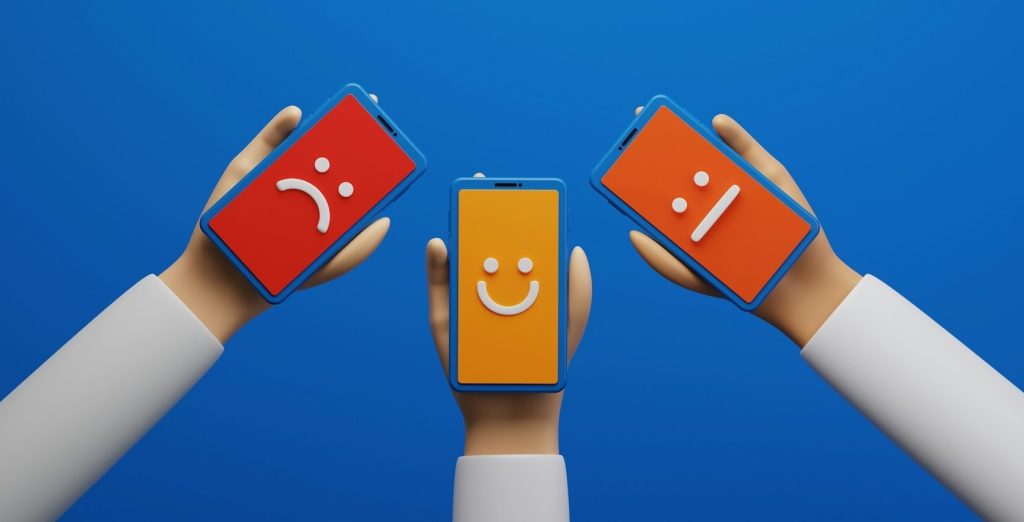
Firstly, in some studies, classroom use of smartphones has resulted in positive academic outcomes. Personalised and self-regulated learning, classroom engagement and second language learning have all been shown to benefit from their use (Oluwafemi et al. 2021).
Secondly, research studies need to be read and interpreted carefully. Sometimes ‘screentime’ and ‘smartphone addiction’ are considered interchangeably, which is misleading. Little research seems to exist that indicates a negative correlation between the amount of time spent looking at a screen and academic learning and/or wellbeing.
Furthermore, whilst the evidence cited above highlights the potential negative impact of smartphones, the way ‘smartphone addiction’ is described is typically inconsistent. ‘Smartphone overuse’, ‘excessive smartphone use’, ‘problematic smartphone use’ and more are all adopted, each suggests a different understanding of what we mean when we say students are addicted to them.
Defining problematic smartphone use (PSU)
The measurement of smartphone use that can be called ‘problematic’ can also vary. Commonly used assessment tools include the Smartphone Addiction Scale (SAS) and the Mobile Phone Problem Use Scale (MPPUS), each of which defines PSU differently (Harris et al. 2020). Inconsistencies are also present in the way research data are collected. Some studies are predicated on ‘self-reported use’, whilst others reflect actual use. The former is less reliable. For example, females prone to depression, lacking emotional support or experiencing bullying are more likely to overestimate smartphone use (Yook, In Hye et al. 2019).

There is a tendency to unfairly conflate all smartphone use with negative outcomes, regardless of the user’s activity. Among young people certain apps e.g. Snapchat, Instagram and TikTok, are shown to be more problematic than others (Noë et al. 2019). There is also a difference between active use (such as posting messages or images on social media) and passive use (e.g. watching YouTube videos).
Some academics point out that excessive or problematic use of smartphones could derive from pre-existing conditions such as compulsive behaviours, loneliness and anxiety. This suggests problematic use is more a symptom than a cause (Busch and McCarthy, 2021).
Should smartphones be banned?
Smartphone use in UK schools is now banned in schools up to the age of 16, and other European countries have already mandated nationwide restrictions. Yet the evidence for banning phones in schools is currently inconclusive.
Empirical and anecdotal reports on the efficacy of these policies is typically positive. There is some evidence to suggest academic improvement too – both in terms of results and student focus in lessons (Beland and Murphy 2016). However, much of the data shows that phone bans in schools make negligible difference to academic performance (Rahali et al. 2024). There is also little evidence to show they have much impact on student wellbeing (Goodyear et al. 2025). Whilst introducing bans is probably conducive to nurturing constructive behaviour during the school day, schools are unable to mandate limitations outside this time.
Developing Sevenoaks’ smartphone-free approach
Going much further than just banning phones in schools is much more likely to net positive results. If students are still able to make use of smartphones any time outside the school day, could their perceived negative effects, particularly on wellbeing, be mitigated?
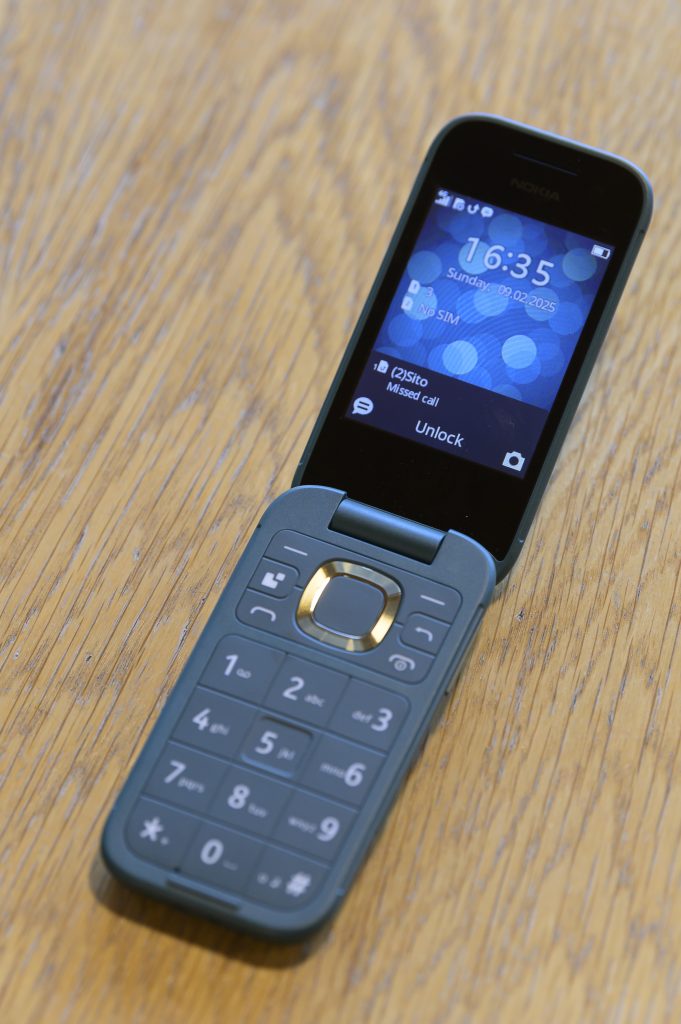
It is for this reason that we changed our mobile phone policy. Previous to this academic year, phones were banned during the school day for Lower and Middle Schools. As a result, we observed a significant increase in students talking to each other, playing games and independently reading. Taking this one step further, students in Years 7 and 8 were encouraged to give up their smartphone completely and instead receive a non-smartphone as a gift from the school. These ‘brick’ phones can make and receive calls and text messages but cannot connect to the internet. This was supported by policy that states Lower School students are not allowed to bring a smartphone or smart watch onto campus.
Implementation
Working with a researcher at the Chartered College of Teacher Training, we are using a mixed methods survey to gather data over 12 months. This includes self-reported phone/screen use and elements of wellbeing and flourishing.
Students have been asked to record time spent on ‘free time’ activities i.e. those not associated with phone use. They are also answering questions relating to self-identity and their relationships with others. We have conducted termly focus groups each term with students in both year groups to gain greater insight into their experiences of phone usage. This will be combined with insight from teachers, form tutors and parents.
Some students have chosen to be completely smartphone free, whereas others have chosen to use their smartphone in the evenings and at weekends. This approach is enabling us to collect data on the way smartphones can affect student wellbeing in the context of the school community.


Initial project findings
The main feedback acknowledges that students are more sociable and interact with each other more. Students in both Years 7 and 8 noted that their classmates play football, table tennis or cards during break times instead of playing virtual games or watching TikTok videos.
There were a few comments on the technological capabilities of the non-smartphone models:
“I would say that it’s a downgrade and an upgrade to have a Nokia. If you have it on silent, you don’t hear calls, but if you have it on sound then you get like loud popping noises…. Texting takes forever. The upgrade is I think you get everyone getting more social.” (Year 8 student).
However, overall, the response from students has been positive. When asked how they feel about the new school policy that bans smartphones, the students mainly described how it has improved interactions between students.
“I feel that it is a good policy because people can focus on spending more time with friends.” (Year 7 student)
“It allows social activity between people who actually know each other.” (Year 7 student)
Further findings will be collated and inform school policy moving forwards.

Mark Beverley is Director of Institute of Teaching and Learning at Sevenoaks School. His initial study can be read in the school’s most recent academic journal, Innovate VII, with further updates due later this year.
References
Ali-Jaoude E, Naylor KT, Pignatiello A. (2020) Smart phones, social media use and youth mental health. Canadian Medical Association Journal. 192(6). Available at: https://www.cmaj.ca/content/192/6/e136
Beland, LP and Murphy, R., (2016) Ill Communication: Technology, distraction & student performance, Labour Economics, Volume 41
Busch, P., McCarthy, S.(2021) Antecedents and consequences of problematic smartphone use: A systematic literature review of an emerging research area, Computers in Human Behavior, Volume 114
Carter, B et al., (2024) ‘More to life than staring at a small screen’: a mixed methods cohort study of problematic smartphone use and the relationship to anxiety, depression and sleep in students aged 13-16 years old in the UK: BMJ Mental Health
Felsoni, D., Felisoni, Strommer Godoi, A. (2018) Cell phone usage and academic performance: An experiment, Computers & Education, Volume 117
Glass, A. L., & Kang, M. (2018). Dividing attention in the classroom reduces exam performance. Educational Psychology, 39(3), 395–408.
Goodyear, Victoria A. et al. (2025) School phone policies and their association with mental wellbeing, phone use, and social media use (SMART Schools): a cross-sectional observational study, The Lancet Region al Health – Europe, Volume 51
Harris, B. et al. (2020) “Problematic Mobile Phone and Smartphone Use Scales: A Systematic Review,” Frontiers in Psychology 11 pp. 672.
Noë, B et al.(2019) Identifying Indicators of Smart phone Addiction Through User-App Interaction, Computers in Human Behavior, Volume 99
Oluwafemi J. Sunday, Olusola O. Adesope, Patricia L. Maarhuis. (2021) The effects of smartphone addiction on learning: A meta-analysis, Computers in Human Behavior Reports, Volume 4
Rahali, M., et al., (2024) Does the evidence support a school ban on smartphones? Available at: https:// blogs.lse.ac.uk/medialse/2024/10/03/does-the-evidence-support-a-school-ban-on-smartphones Yook, In Hye., Park, So Jin., Choi, Mun Joo., Kimc, Dai Jin., Choi, In Young (2019) Factors Affecting Smartphone Usage Self-Report Levels, Studies in Health Technology and Informatics
FEATURE IMAGE: by Margo Evardson on Unsplash
Support Images: Our thanks to Sevenoaks School and to Nick Fancher For Unsplash+ & Getty Images For Unsplash+
