
SCHOOL EFFECTIVENESS AND INCLUSION
Dr Rita Ke Ren from the Institution of Child Education and Psychology Europe (ICEP) considers the questions that effective school leaders ask about being inclusive.
What inclusive schools have in common
What can a school leader in Ireland learn from a teacher in Dubai? What might a principal in a large city recognise in the experience of an educator working in a rural community thousands of miles away? At first glance, perhaps not very much. Different countries. Different policies. Different resources. Different challenges.
Yet through our work with educators from around the world, a different picture has emerged. Whether working in mainstream or specialist schools, international settings or local communities serving learners with diverse needs, school leaders often describe remarkably similar approaches to building inclusive schools. The similarities are rarely about policies or programmes. They are about leadership and asking the right questions.
Across these conversations, leaders return to the same themes: building relationships, creating opportunities for collaboration, engaging meaningfully with students and families, and fostering a culture where belonging is everyone’s responsibility.
The power to include
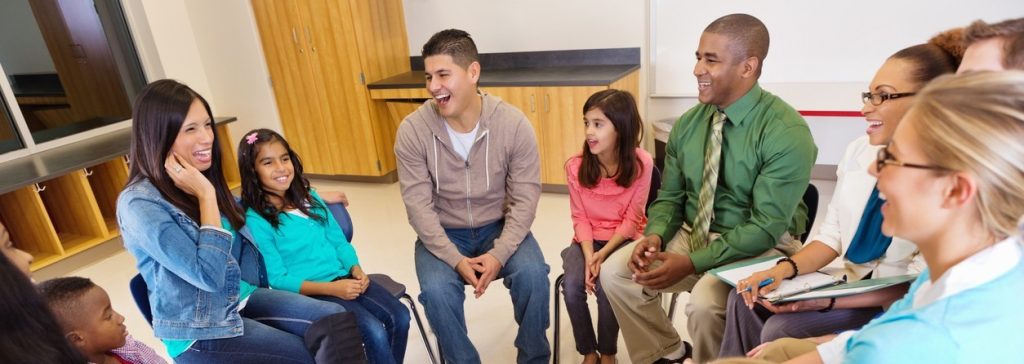
One school leader in Portugal shared an example that has stayed with us. Inclusion training did not stop with teachers. Administrative staff, caretakers, canteen personnel and support staff were all involved in conversations about participation, belonging and inclusion. The thinking behind this was simple: students experience school as a community. Every interaction shapes whether they feel seen, welcomed and valued.
It may sound like a small decision, but it reflects a much bigger leadership philosophy. As Blandford (2017) reminds us, “Leaders have the power to include; teachers, parents and carers have the capacity to educate children and young people to be inclusive.” Inclusive leadership is not about doing everything yourself; it is about creating the conditions in which everyone contributes to a culture of belonging.
Inclusive leaders widen the circle
Many schools still position inclusion as the responsibility of a specialist team or a small group of staff. The leaders we heard from described something different. They deliberately widened ownership. Instead of asking, ‘Who is responsible for this learner?’, they asked, ‘How do we, as a school community, support every learner to participate and succeed?’
That mindset was reflected in the structures they created. Teachers met regularly to discuss learner needs, share successful strategies and solve problems together. Action research became a way of exploring barriers and testing new ideas. Professional dialogue was not seen as an extra task squeezed into an already busy week; it was recognised as part of the work of improving practice.

Involving families
The same philosophy extended to families. School leaders speak about building relationships based on trust, particularly with families of children with additional needs and those from diverse cultural and linguistic backgrounds. Listening is not treated as a consultation exercise; it is part of everyday leadership.
Perhaps that is the most interesting lesson emerging from these conversations. The challenge is not simply making schools more inclusive. It is creating the conditions in which inclusion can flourish.
Questions and inclusion
That raises some important questions for all of us.
- What conversations are taking place in our staffrooms?
- Whose voices are shaping the decisions we make?
- Who is invited into conversations about belonging and who is still missing?
- What assumptions might we, as leaders, need to challenge?
The answers will look different across countries, cultures and school systems. They should. But asking these questions may reveal more about a school’s approach to inclusion than any policy document ever could. And perhaps that is the lesson school leaders around the world continue to teach us: inclusive leadership is not defined by a single programme or initiative. It is built, day by day, through the culture leaders create and the people they empower.
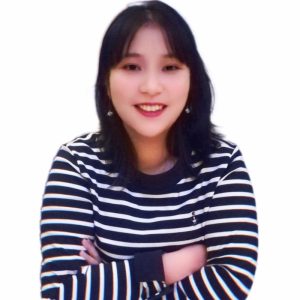
Dr Ke Ren (Rita) is the academic programme lead at ICEP (Europe), the Insiitute of Cild Education and Psychology,
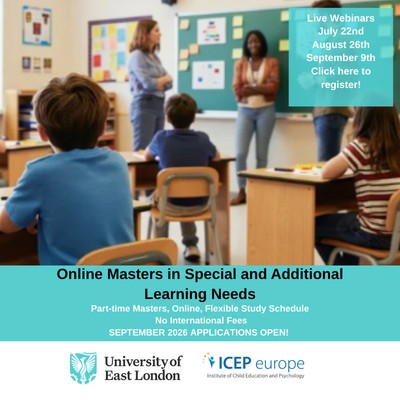
ICEP offers a range of online and in person courses and is currently enrolling for an online Masters in Special and Additional Needs in association with the University of East London which starts in September.
Reference
Blandford, S. (2017) Achievement for All in International Classrooms. 1st edn. Bloomsbury Academic. Available at: https://www.perlego.com/book/808437 (Accessed: 17 June 2026).
FEATURE IMAGE: by Drazen Zigic for iStock
Support Images: by SDI Productions for iStock & kali9 for iStock