
PEER CULTURE AND PRINCIPLES
Naotaka Ikebe, Visiting Professor at Waseda University Graduate School of Education and Former Principal of Shonan High School, Kanagawa looks at the human qualities at the heart of Japanese Careers Education.
The system
In Japan, careers education became a formal cross-curricular priority in the early 2000s, when the Ministry of Education, Culture, Sports, Science and Technology officially positioned it as an essential dimension of schooling. Schools were called upon to cultivate what is known as ningen-ryoku, a concept that might be translated as ‘total human capability’: the integrated capacities needed both to contribute to society and to live as a confident, self-directed individual.
Notably, this vision does not rest primarily on professional counselling programmes or dedicated career advisors, as might be the case in many Western contexts. Structured one-to-one guidance exists, but it sits within a broader educational philosophy: that the qualities needed to build a career are best developed through authentic, collaborative experience embedded in school life itself. Career education in Japan is, above all, something that happens in and through the lived culture of the school.

Peer Counselling in Japanese school culture
In Japan clubs, student organised events, and the power of shared challenge are at the centre of school life.
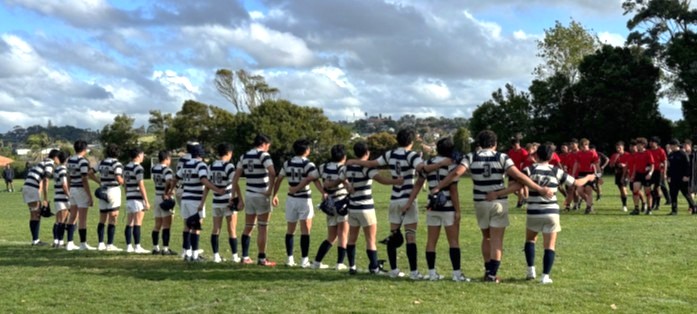
One of the most distinctive — and least visible to outside observers — features of Japanese secondary education is the informal but powerful practice of peer-to-peer career support. Students talk openly about their dreams, aspirations and future directions. This does not happen in structured sessions; it emerges naturally from the close relationships built through school events and club activities.
Shonan High School in Kanagawa Prefecture, which celebrated its centenary in 2021, offers a mature example of this culture in practice. When one student shares a dream, peers do not simply offer encouragement — they think together about what the path might look like and how it might be achieved. The decision and the action always belong to the individual, but they take place within a culture of genuine, sustained support.
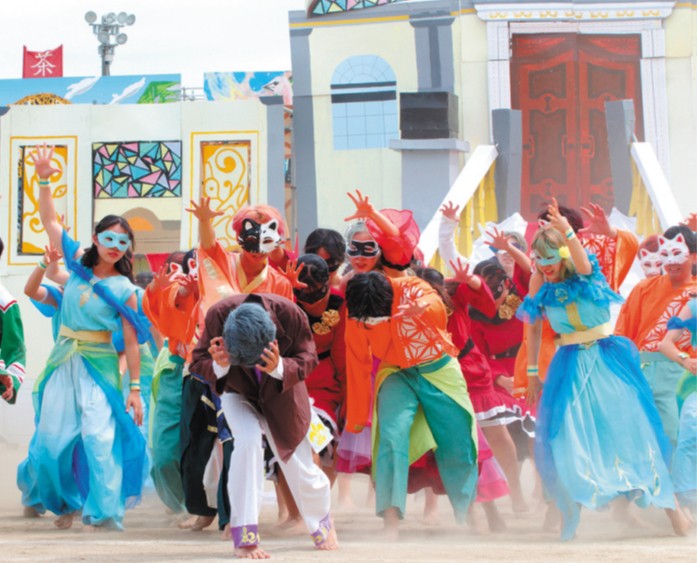
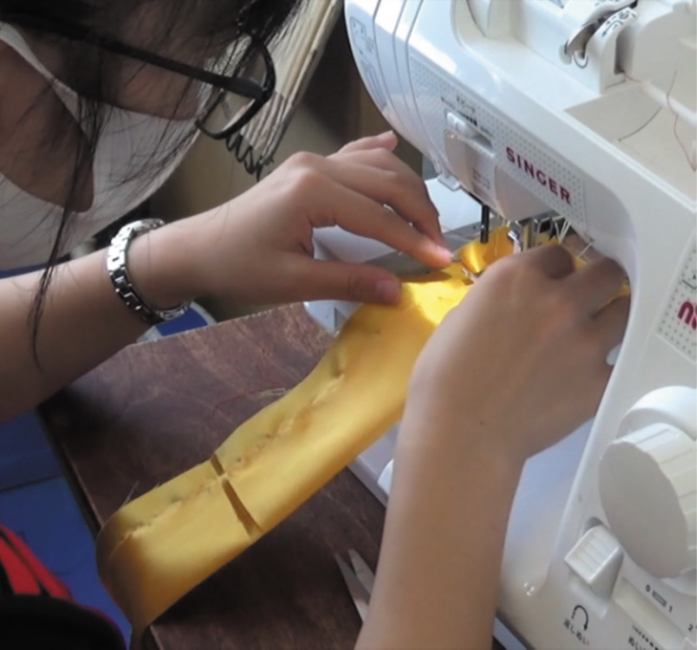
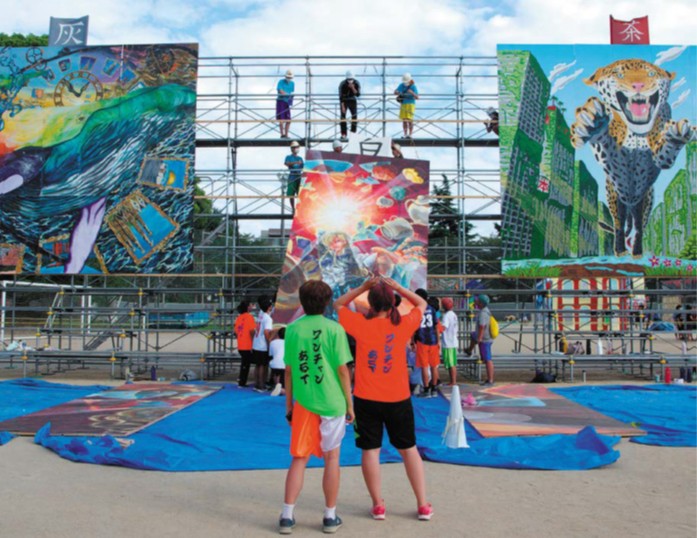
This peer dynamic finds its fullest expression in the school’s flagship event: the annual sports festival, which is far more than an athletic competition. Students are organised into cross-year teams, with third-year (G12) students taking the lead. Each team designs and builds its own large-scale performance — original costumes, props, choreography and a giant painted backdrop — over the course of an entire year. Senior students must organise their team, resolve conflict, revise their plans under pressure and bring younger students along with them. Those younger students, in turn, observe and learn, preparing to take on leadership themselves the following year.
This cycle is, in effect, a living laboratory for the competencies that Japanese career education explicitly aims to build: the ability to form and sustain relationships, to manage oneself, and to respond constructively to challenge. Teachers support the process through a philosophy of deliberate stepping back — in Japanese,
te wa hanashite mo me wa hanasuna:
“let go with your hands, but never take your eyes away”.
Why this culture matters more than ever
As generative AI becomes part of everyday life in schools, a question is gaining urgency: what are the distinctly human capacities that education must now protect and cultivate with greater intentionality?
The peer counselling culture and experiential learning embedded in Japanese school life offer one compelling answer. The qualities it develops — empathy, the ability to listen deeply, the courage to commit to a direction under uncertainty, the willingness to support another person’s growth — are precisely those that AI cannot replicate. These are not soft additions to a rigorous curriculum; they are the foundation of a life well navigated.
Shonan High School’s motto captures this spirit:
Always do what you are afraid to do.
In an era when AI can handle an ever-wider range of cognitive tasks, the capacity to choose the harder path, to take responsibility, and to act with others in mind becomes not less important, but more so.
How will you change the world?
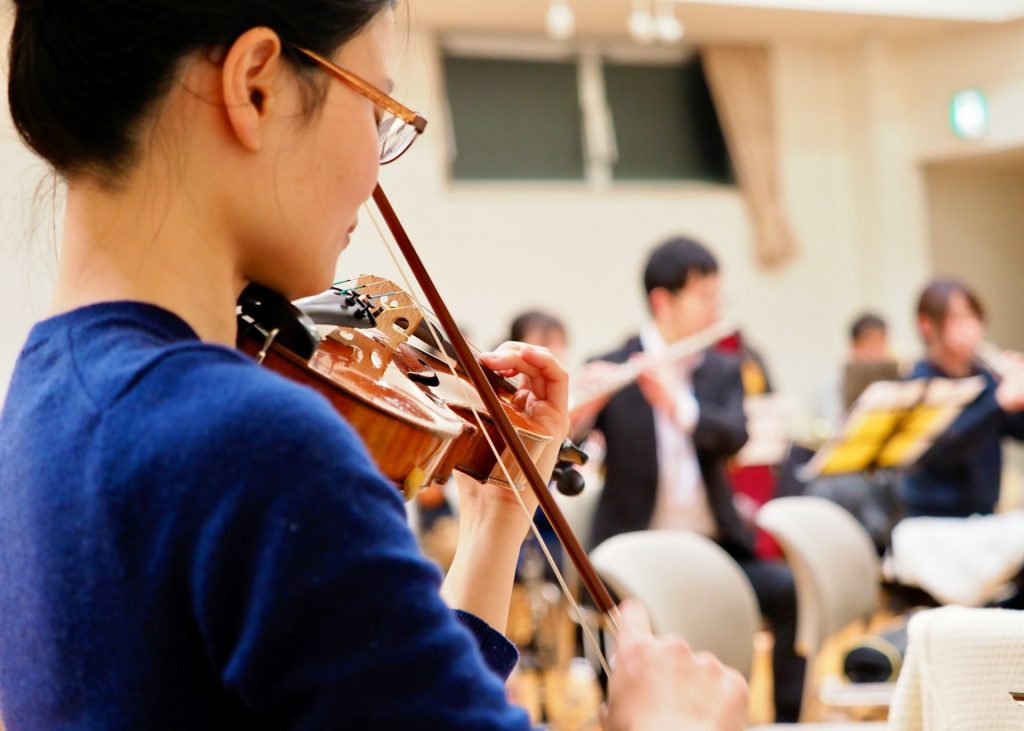
Each year, Shonan graduates go on to leading universities, pursue careers in music, the arts, business and public service, and increasingly travel abroad on scholarships supported by the school’s alumni foundation. What they carry with them is not only academic knowledge, but the invisible strengths shaped by years of shared challenge.
The question that Shonan asks of every student — ‘How will you change the world?’ — may speak to schools everywhere, and perhaps nowhere more pointedly than now.
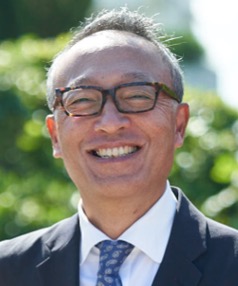
Naotaka Ikebe is Visiting Professor at the Graduate School of Education, Waseda University, and the former Principal of Shonan High School, Kanagawa
1-6-1 Nishi-Waseda, Shinjuku-ku, Tokyo 169-8050, Japan
FEATURE IMAGE: by Allison Saeng For Unsplash+
Support Images: by Getty Images For Unsplash+, & Kazuo ota on Unsplash and a special thank you to Shonan High School
