

THE TWO SIDES OF PROJECT FEASIBILITY
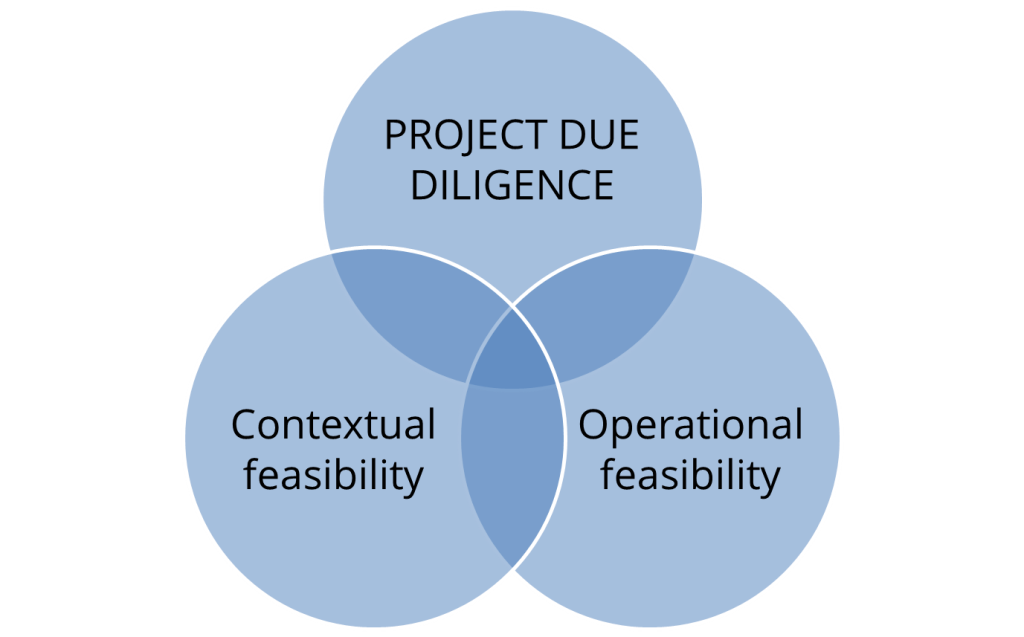
According to Helen Kavanagh of chk Education, a successful school start-up depends on establishing an early due diligence framework that examines both contextual and operational feasibility.
The due diligence framework
The question is often asked: what is the most critical exercise to conduct before launching a project to open a new school? The response varies, but it should involve spending time, and dare I say it, a proportionally small amount of money, to conduct the necessary due diligence to protect both reputation and investment by demonstrating project viability.
A disciplined approach to due diligence—anchored in rigorous feasibility studies and robust financial planning—not only helps decision-makers understand demand, costs, and long-term viability but also reduces the likelihood of pitfalls along the way. Further, it informs long-term strategy, increases the likelihood of delivering high-quality education and may well avoid any disjointedness and discontent between owner/operators and academic leaders in the future.
There are two necessary lines of inquiry to conduct
- Is there a demand for what the new school will offer? In other words, is it contextually feasible?
- Can the new school survive its first five years of operation – the years of highest risk? Can it be operationally feasible?
Contextual feasibility: assessing demand, supply and fit
A thorough contextual feasibility study answers the core questions: is there a need to be met and a sustainable pathway for delivering a successful school in a territory that is suitable for the organisation? The report itself may well be customised to a particular client’s needs but in broad terms it should cover:
- Local and regional political and economic landscapes.
- Demographics, market demand and the competition’s offering.
- A comparative analysis of fees at competitor schools.
- The target student profile.
- Human Resources: analysis of competitor compensation and benefits.
- Comparative cost of living analyses.
- Top-level staff costs.
- Location and site feasibility, including any government zoning restrictions.
- Regulatory requirements, necessary approvals. and likely best-fit accreditation requirements.
- Contextual risk assessment: challenges, opportunities, and mitigation.
Operational feasibility: vision delivery
Establishing the school as a good fit for the area is one thing, but can it operate sustainably within that context? This report might include:
- A discussion of the school’s objectives, ethos and values.
- An analysis of the business and governance models to adopt.
- Operational site assessment, facility requirements, and regulatory prerequisites.
- Projected student, staffing and curriculum data for up to 10 years, showing best – and worst-case outcomes in terms of both operational profit and loss and facility requirements.
- Operational models for a suitable school day, week and year.
- Estimated capital costs for land, construction, Furniture, Fittings and Equipment (F, F & E) and IT infrastructure requirements.
- The cost of project consultancies that can be capitalised.
- The stages in which a school might be built.
- Pre-opening operational costs.
- All other long-term operating costs and contingencies, including taxation and long-term rental.
- Estimated long-term revenue streams, including outreach programmes.
- A project implementation roadmap.
Integrating contextual and operational feasibility reporting
Credible feasibility planning that combines contextual and operational perspectives helps partners. investors, operators and academic leaders assess risk and-return dynamics. It helps an understanding of how the school can operate with financial integrity, even during early years of operation when cash flow is tight, while clarifying what is required to establish successful long-term educational quality.
Both reports together provide a coherent due-diligence framework that can be undertaken step-by-step. My advice would be to first commission a contextual report, then use its findings to inform an operational study which will lay the basis for both educational and business planning.
Once the evidence from these studies are in place, school sponsors are able to follow a structured sequence to operationalise the theory for each particular venture and can approach regulators, investors, potential partners and, ultimately, families, with well-informed confidence.
This transparent, risk-aware approach builds confidence with all stakeholders, increasing the odds of establishing a successful, high-quality school that will serve the needs of students, families, and the broader community for years to come.

Helen Kavanagh is Co-Founder of chk Education
chk Education works closely with Consilium Education to provide a comprehensive due diligence service for start-up, new and growing international schools, covering market Intelligence, feasibility, business and educational Planning.
For more about Market Intelligence and contextual feasibility reports from chk Education see
https://www.chkeducation.com/market-intelligence-reporting/
For more about operational feasibility, educational and business planning reports for start-up schools from chk Education and Consilium Education, see:
https://www.chkeducation.com/support/school-start-up-and-growth/
FEATURE IMAGE: by Getty Images For Unsplash+
