
LEARNING AND LAUGHTER
ITM editor Andy Homden talks with Council of British International Schools CEO, Colin Bell, as he prepares for the COBIS conference in May.
Colin Bell is the kind of enthusiast who makes a conversation about education a pleasure. After 15 years at the helm of the Council of British International Schools he is clearly as committed as ever to the cause of learning in general, and British-style learning in particular. But he also listens and takes his own learning seriously – his LinkedIn moniker is ‘Lifelong learning and laughter’. After a couple of minutes, you definitely see what he means.
Under his leadership, COBIS has grown to a membership of over 420 schools, not to mention the many COBIS supporting associates. He is clearly not about to call a halt to this period of growth, aiming to top the 1,000-membership mark over the next five years or so.
He makes no apology for this ambitious target, nor for the fact that new members will be expected to undergo a thorough process of scrutiny to show that they can meet the COBIS Compliancy Standards. If that sounds a little daunting, it is not designed to be: the application is couched within a supportive framework designed to raise standards while welcoming new members.
“We want to have as many members as possible. COBIS is what I call a ‘global self-improving system’.”
His mantra of “inclusive, collaborative and ambitious” characterises the approach well.
“Unity in diversity is important. We want to accommodate schools with a range of different perspectives because this means we can learn from each properly”.
He embraces the new era in which the large majority of international students go to school in their own country. He also takes the responsibility to assist new generations of international teachers develop ‘British Educational Values’ very seriously.
“For me, this has a deeper meaning than the demonstration of ‘British Values’ in a recognised British international school. The fact that this whole area of values is problematic does not mean that it should be avoided – quite the reverse. I am particularly looking forward to the conversations at our coming conference that will be sparked by historian David Olusoga as we think about the implications of post-colonial British bias affecting the values of a British international education.”
Conference
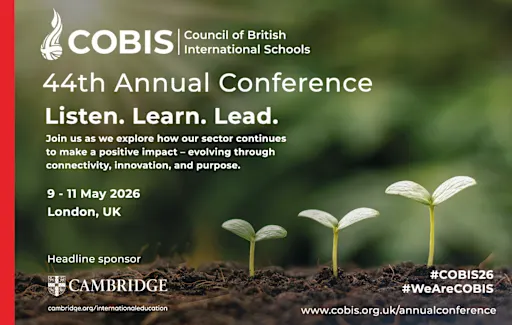
And he is clearly looking forward to the COBIS conference which will be held on London from May 9th – 11th. Difficult issues are not being ducked.
“These are worrying times and we know people look to us for help. But the best way we can do this is to enable them to learn from each other. Conversations about what has worked – or not – will be invaluable.”
It also helps that COBIS have invited BBC Defence Correspondent Frank Gardner, Andreas Schleicher, the OECD’s Director for Education and Skills and former Afghan Deputy Minister Dr. Attaullah Wahidyar , to address the conference.
“Education takes place in a context and we have to understand both the bigger geo-political and educational pictures if we are to get things right for our students.
“The world that has supported the growth of international education is changing beyond recognition. How we adapt will depend on our understanding of what it will become”.
Innovative member services
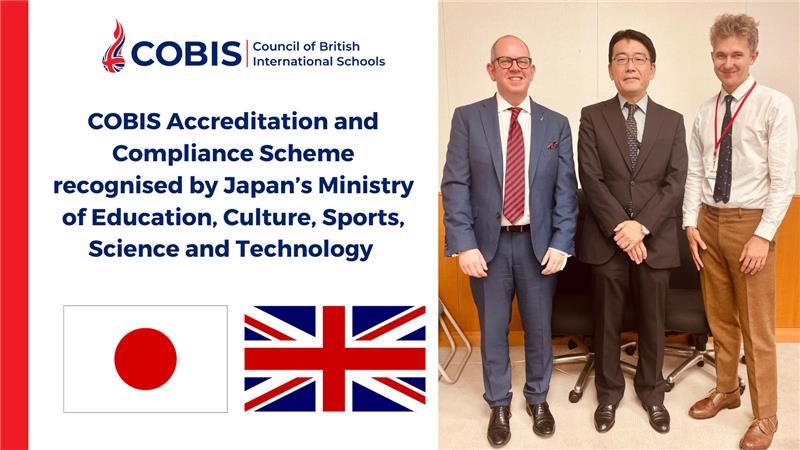
Flexibility and open-mindedness have been keys to recent success. Under Bell, COBIS have, perhaps, been responsible for the biggest leap in official recognition of an international education by national bodies since the campaigns to acknowledge the matriculation status of the IB. The agreement with the Japanese Ministry of Education to recognise qualifications of students attending a COBIS accredited school in order to enter Japanese national universities got the ball rolling in January 2026 and a similar agreement followed in Thailand. Bell and his team are working on others: expect news from Saudi Arabia and India at some point in the near future.
Collaborative agreements with US-based accrediting bodies such as NEASC and WASC negotiated on Bell’s watch, have not only proved popular with American colleagues, but give COBIS members the chance to enhance applications for college credit by US-bound students. British independent schools can also use their ISI inspection credentials to fast-track COBIS and NEASC/WASC, accreditation, bringing significant benefits to the growing number of their students who wish to go to the USA for their higher education.
A little gripe
So, what else does Bell have in his sights? There is something that he would like to address soon:
“We are good friends with the Department for Education (DfE) in the UK. However, despite the quality of our accreditation services, which we have voluntarily put under the microscope of the UK’s Quality Assurance Agency, COBIS accredited schools still cannot offer the Early Career Teacher Induction Programme”
Outside of the UK, this programme is the exclusive purview of schools which have been successfully visited under the British Schools Overseas (BSO) Inspection programme. This obviously rankles a little. However, I would not bet against Bell and his team getting an amendment over the line in the near future!
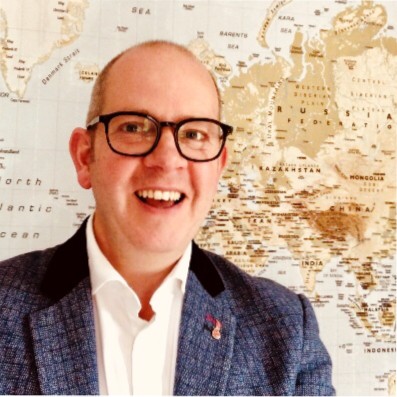
Colin Bell was talking to ITM Editor, Andy Homden.
You can meet Colin at the annual COBIS conference taking place this year in London from May 9th to 11th.
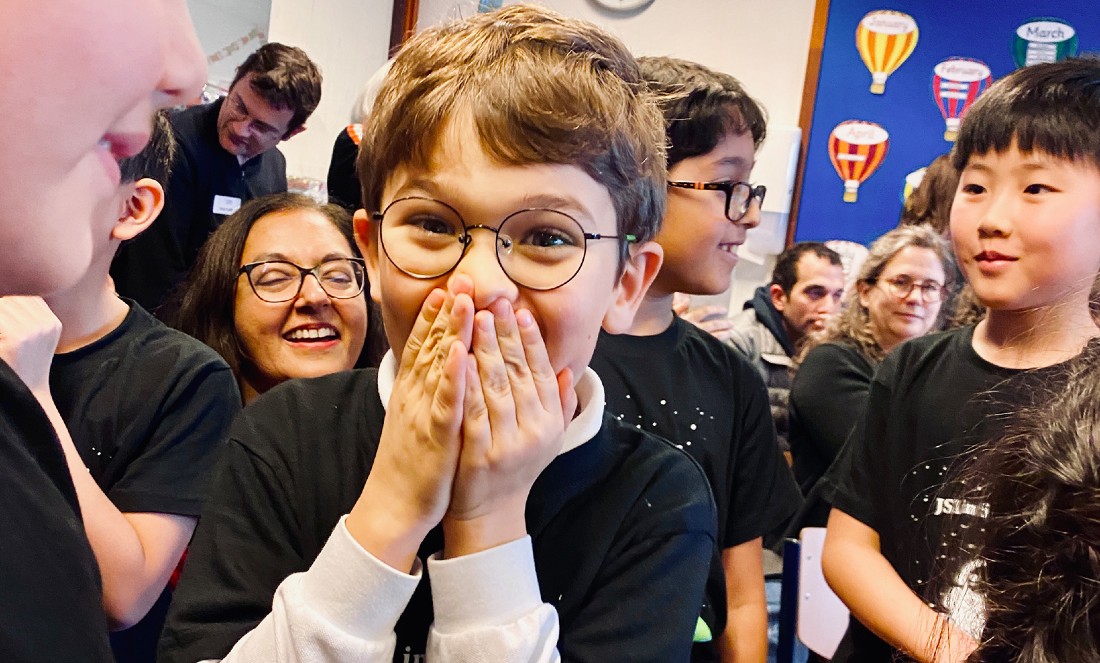
Feature Image: Thank you to The British School in The Netherlands: Launching a lifelong love of learning
Support images with the kind permission of COBIS
