

WHAT DOES DATA REALLY KNOW ABOUT A CHILD?
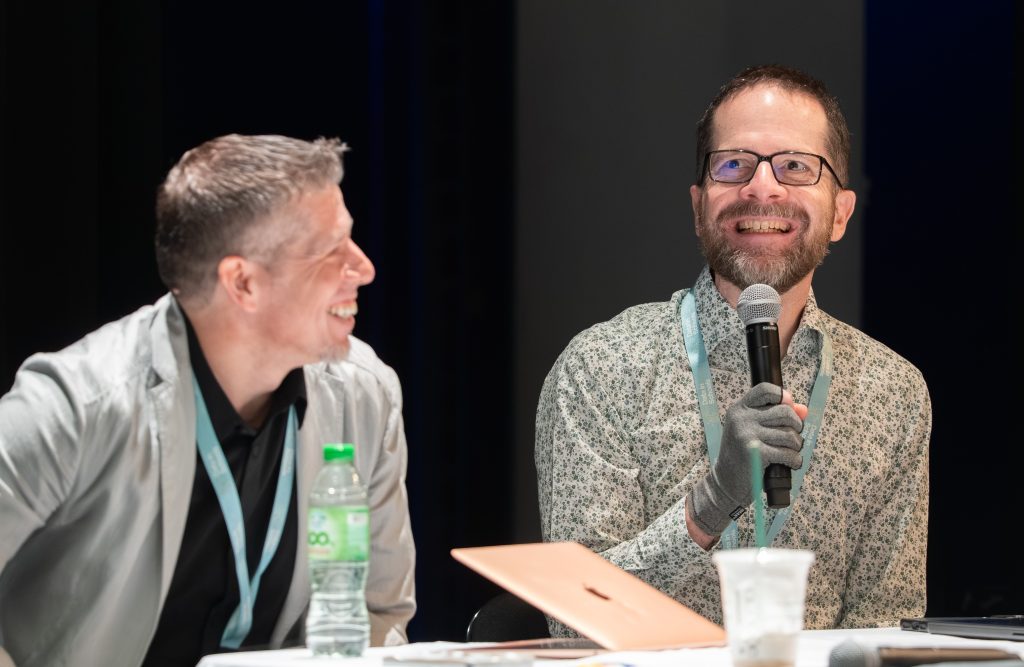
Paul Swanson and Matthew Savage reflect on Season 1 of their podcast ‘Data Talks’ in which they hosted some of education’s most compelling thinkers.
Why data talks
Paul
“‘The Data Talks’ podcast was never supposed to be about spreadsheets. From its first episode we asked ‘What even is data?’ We wanted a sustained, honest conversation about how schools see children, and what gets lost in the looking.
“Initially it grew out of Data in Schools, which has been organising conferences at international schools for six years. I joined in 2024 — around the same time I met Matthew, who was keynoting our conference in New Delhi. I soon moved from Singapore to Atlanta and wanted to stay connected to the data community overseas. A podcast seemed like the right vehicle, and Matthew was the first person I thought of to join me.”
Matthew
“When Paul asked me to get involved, I didn’t hesitate. Every conversation I have with schools about data starts another one — it’s like dominoes. We wanted to create a space to hold them. And this was it: Data Talks was born.”
What is data?
Paul
“This turned out to be the central question for the whole season. One guest stretched my thinking further than I expected — she shared that even the silence of students can be data. It also made me think about what we’re doing when data isn’t used to answer a question at all. There are times we find ourselves doing ‘data theater’ — going through the motions without moving towards any action.”
Matthew
“I have always believed in the importance of a diversity of data, a plurality of data — and always felt that the version sought by schools is too narrow, too reductive and too fixed. After this podcast, I felt inspired and my thinking was illuminated, by what we came to see as the ‘golden threads’ running through the conversations we had throughout Season 1.”
Paul
“What struck me was how consistently one message come from a range of different guests and in a number of different contexts: there’s a real groundswell of educators who want to do things differently.”
Matthew
“Yes – we can do more and in a better way — but we already are. The journey has already begun.”
Children and metrics
Paul
“The interpretation of data is impersonal and one theme to emerge was how schools can respect children holistically without reducing them to a standardised metric.
“I have two daughters in primary school, and when I look at their profiles in a data system I always ask: does that look like my daughter? I want to see the whole child — not just one or two slices. We need to think carefully about what data we aren’t seeing, and how our interpretations might shift as a result.”
Matthew
“The first thing is to recognise the challenge, name it and embrace it. The things we want to measure are so complex, fluid, shifting and individual that they pretty much defy measurement. That doesn’t mean we shouldn’t try — but we should do so knowing we’ll never fully arrive.”
Paul
” . . .which is uncomfortable for systems built around certainty and completion.”
Matthew
“It is. And the most important thing? Context. And, anyway, if data presents relational understanding, then that story we are reading never really stops.”
Fear and trust
Paul
“Our guests discussed what we came to see as the ‘evil twin’ of data – fear. We therefore need to think about data as something done with teachers and students rather than to them. When teachers have voice and choice over their own data questions, it becomes genuinely empowering. The most important data literacy skill isn’t technical competence, it’s emotional intelligence, the capacity to sit with vulnerability and grow from it.”
Matthew
“Our guests argued, passionately and consistently that if we start from a place of relational curiosity — from kind, warm roots — beautiful things can, and will, grow. Accountability seemed to be one of the main toxins.”
Paul
” . .because once people feel judged by data, they stop engaging honestly with it.”
Matthew
“Precisely. If anyone feels and fears that the main function of data collection is to hold humans accountable — as a judgment — then they will never trust it. If it is a judgment-free journey of growth, who wouldn’t want to engage with it?”
Cold data
Paul
“Our guests warned about ‘cold’ data being viewed out of context. We need to understand this. One idea that stayed with me was what you call ‘slow data’ — slowing down to explore the nuances before rushing to action. What we came to understand was that few effective actions in schools are purely data-driven. Most are data-informed, which means human judgement is always in the room. The task is to keep that judgement honest, curious and humble.”
Matthew
“We always need to understand context. Every piece of contextual data not only warms up the colder data to which it adds — it demands yet more context in return.”
Paul
“. . . which is why humility is important. No matter how much we know, there is probably more that we don’t.”
Matthew
“Whilst our reflex is to seek the truth — this mythical objectivity — the data is, fundamentally, only the data, and every piece of it just one piece. And that’s ok.”

Data use
Paul
“As the conversations went on, we came to understand how data can be used effectively to inform decision-making and action. We have seen how data informs improvement, leading to better schools, better people, better students. To do that we need to be smart and wise, building trust and vulnerability, approach data-use with humility and grace, and keep iterating to improve bit by bit.”
Matthew
“For me, data in schools should be used as an instrument of healing, not of harm. A flag, not a fact; a signpost, not a label; a question, not an answer. A video, if you like, not a photograph. It must belong to the child and be honoured by the teacher. After all, we are all made of stories — and this is theirs.”

Paul Swanson is a podcaster and Director of Innovation at Atlanta International School.

Matthew Savage is the Founder of the Mona Lisa Effect. A former international school principal, Matthew is an educational writer podcaster and trainer.
To listen to Season 1 of Data Talks with Paul and Matthew, click here: https://datainschools.org/data-talks-podcast
Season 2 of Data Talks — 14 episodes, 30+ guests — launches in September 2026. Themes include Data and Grading, Data and Unmet Needs and Data Survivors. Available wherever you listen to podcasts.
FEATURE IMAGE: by Jason Leung on Unsplash
Support Images: with kind permission from Data Talks & A. C. For Unsplash+
