

What are teachers reading?
Sal Flint talks to Sarah Raffray
Consililum Education library specialist, Sal Flint continues her column – School Readers – in which she talks to educators about their favourite books. This month’s Reader is Sarah Raffray, Executive Principal of King’s College International School, Thailand.
Why ‘School Readers’?
We all urge kids to read, but how has reading shaped our own personal and professional lives? I want to know which four books have most influenced the people I talk to – an unforgettable children’s book, a novel, a work of non-fiction and a ‘go-to’ book about education.
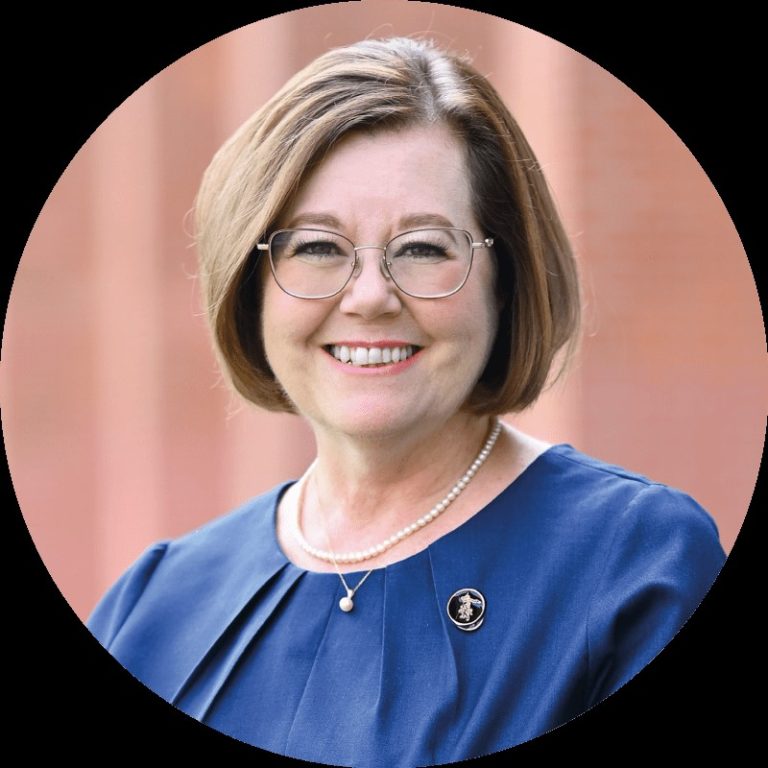
This month’s School Reader is Sarah Raffray.
The Executive Principal at King’s College International School Bangkok, Sarah, was educated in the UK. She graduated from the University of Manchester with a BA in Latin and English (Hons) and subsequently earned her PGCE and an MA in Literature from the University of Salford.
A hugely experienced educator, Sarah has over 30 years experience in education and has held numerous leadership positions. Prior to joining King’s Bangkok, Sarah was the Headteacher of St Augustine’s Priory in Ealing for eleven years. Additionally, she served as Chair of the Society of Heads in 2021-2022 and has been a Governor at several schools. With her experience as an inspector for the Independent Schools Inspectorate (ISI) and involvement in the Independent Schools Council, it’s easy to see why I felt a little awe struck when I met Sarah during a visit to King’s College.
Sarah quickly put me at ease, and we had some great chats about the power of reading and the importance of libraries. I loved how she places children at the centre of all decision-making. As a mother of two boys, I imagine this approach pleases them as well! It was a pleasure to discuss Sarah’s ‘four’ books with her.
Sarah’s ‘four books’
(Click the book cover to follow the link to Amazon)
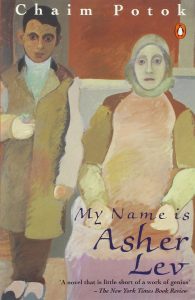
1. Chaim Potok: My Name is Asher Lev
“I was first recommended My Name Is Asher Lev by a teacher friend, who said she wished she was going to be reading it again for the first time. When I finished it, I saw exactly what she meant. This novel is about values, faith, and traditions. It is also about what happens when a young man is navigating the strong currents of family expectations. I loved it for what I learned about Brooklyn at a certain time and about Hasidic Jewish traditions. It also raises more questions than answers. How we find our vocation, how we work out our identity in relation to the wishes of our family and tradition is work that is never done. This book explores identity in the most profound way..”
What it’s about
My Name is Asher Lev tells the story of Asher, a young Jewish boy who is a talented artist. He struggles to reconcile his passion for painting with the expectations of his strict Hasidic upbringing. As he grows, he creates a controversial artwork that deeply offends his family and community, causing a painful rift with his father. The choices Asher makes invite readers to reflect on identity, artistic calling, sacrifice, personal truth, and the complex nature of love.
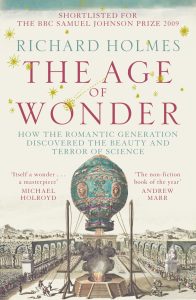
2. Richard Holmes: The Age of Wonder: How the Romantic Generation Discovered the Beauty and Terror of Science
“ What draws me to The Age of Wonder is its interdisciplinary nature and its exposition of a generation of characters whose desire to expand their knowledge crossed all sorts of boundaries (some of them distinctly dodgy by today’s standards). For example, who would have thought that Coleridge, who dined with Humphry Davy, the inventor of the Davy lamp, was also acquainted with Thomas De Quincey, a writer who famously experimented with laughing gas? The intersection of art and science highlights the ways in which the greatest minds of the time were connected. I share the wonder of the book’s title, as it defines moments when creativity exploded across both science and culture. These are the moments in history when the collision of minds and ideas shapes future generations in an astonishing way.”
What it’s about
The Age of Wonder examines the profound impact the Romantic movement had on scientific discovery in the late eighteenth and early nineteenth centuries. Holmes illustrates how key figures sought change through their scientific endeavuors, blending curiosity with artistic expression to explore the beauty and terror of nature. He creates a strong argument that their work reshaped our understanding of science, infusing it with deeper meaning.

3. Charles Dickens: Hard Times
“Hard Times might seem like an odd choice for an education book, but I entered teaching because of a desire to help change lives and the world in which we live. I love so much about this novel: its pressing argument for a human-centric world, its pleasingly satisfying conclusion, and some of the funniest writing I have encountered. Dickens’ critique of a system that prioritises efficiency over compassion resonates with me deeply. It’s a reminder that education must have a big heart, emphasising empathy just as much as knowledge.”
What it’s about
Hard Times by Charles Dickens is set in the grim industrial town of Coketown where education focuses solely on facts and figures, neglecting creativity and emotional development. The character Stephen Blackpool, a factory worker, represents the struggles of the working class, highlighting the injustices of industrialisation. The novel emphasises the need for compassion in a utilitarian system that often overlooks the struggles of the working class.
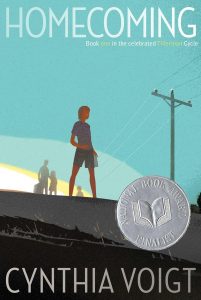
4. Cynthia Voigt: Homecoming
“Homecoming is a poignant story about children seeking safety and working out what or where home is. It reminds me a little of The Silver Sword by Ian Serraillier, which I read when I was very small. I’ve always enjoyed books that explore themes of resilience, justice, and the journeys of resourceful children facing terrible situations. This appreciation is perhaps due to my mum’s involvement in early child protection laws in the UK. The children struggle to articulate their experience with a wisdom that comes from suffering. ‘We’re runaways too, not just runaways.’ The children’s tight-knit relationship is expressed through their singing together. This is an exceptional story of memory, hope, and redemption.”
What it’s about
Homecoming by Cynthia Voigt, published in 1981, tells the story of four siblings—Dicey, James, Maybeth, and Sammy—who, after being abandoned by their mother, must navigate life by themselves. As they embark on a quest for safety and stability, they encounter various challenges that test their resilience. The novel explores themes of family, loyalty, and the search for belonging.
What Sarah is reading at the moment:
Fiction: Hwang Sok-yong’s Mater 2-10
Non-Fiction: Amitav Ghosh’s The Great Derangement Climate Change and the Unthinkable
Education: Ruth Swailes and Aaron Bradbury’s Education Early Childhood Theories

Sally Flint, is a Senior Consultant specialising in school library development at Consilium Education.
If you would like to share your four School Readers, write to ITM on –
FEATURE IMAGE: from Pixabay
