

CROSS-CURRICULAR IDEAS FOR EAL LANGUAGE SUPPORT
Laura Spargo suggests some practical strategies for teachers to help EAL students thrive in the international classroom.
Helping EAL learners find their voice
Speaking more than one language is not only incredibly useful, it’s a tremendous educational asset.
Research from UCL Institute of Education shows that early multilingual exposure creates significant long-term academic advantages for multilingual children compared to monolingual peers. This is good news for any student learning in an international setting.
If you’re teaching students with English as an additional language (EAL), you’re not dealing with a problem that needs fixing. You’re working with a cognitive advantage.
The challenge for us as educators is knowing how to help students unleash their linguistic superpowers. If you’re teaching students with English as an additional language (EAL), you’re not dealing with a problem that needs fixing. You’re working with a cognitive advantage that, with the right support, can give your students a real edge throughout their education and beyond.
Here are some approaches my colleagues and I are using to support our EAL learners.
1. Start with confidence building
When students feel connected and confident, everything else falls into place more naturally; students are willing to take language risks, participate in discussions, and engage more deeply with their learning.
One strategy I would recommend is to introduce structured activities that get students talking, but without the pressure of formal assessment. Collaborative tasks work particularly well, where children have to describe specific items to a partner, such as how LEGO bricks can complete a building challenge, or jigsaw pieces fit into a puzzle.

These exercises provide opportunities for excellent language practice, but most importantly they are a fun way to help students make friendships and build confidence. Strategic pairing can work wonders too. EAL learners really benefit from working alongside strong English speakers who naturally model effective communication. We also find that connecting students who share a first language allows for those richer, more nuanced discussions about complex ideas and emotions that really deepen understanding.
A good confidence boosting tip is to give students time to rehearse what they’re going to say before speaking to the whole class. When children can practise what they want to say with a partner first, it reduces anxiety and allows students to participate fully in classroom discussions.
2. Give students the linguistic tools for learning
When children feel comfortable in their environment, they are better prepared to learn. This is important, because students with EAL have the added challenge of differentiating between everyday language and the more academic vocabulary they need to access an English language curriculum.
According to Steve Strand OBE, Professor of Education at the University of Oxford, it takes children who are new to English at least six years to become proficient in academic English.
Anything teachers can do to lighten the additional cognitive load is welcomed.
One way we help children with EAL to get the most from a lesson is by vocabulary pre-teaching. When we introduce key terms before the main lesson – words like ‘cell’ or ‘dissolve’ in science – we prepare students to understand those concepts in a learning context.

We recommend a dual coding approach based on the theory developed by Allan Paivio, which combines words and visuals to help children process information. Simple illustrations such as Widgit Symbols which depict objects, ideas and actions can strengthen students’ understanding of curriculum vocabulary.
Schools are increasingly encouraging children with EAL to use their first language to support their learning. Translanguaging is an approach where children translate to and from their first language to deepen their understanding of a subject by making connections through language.
Movement can also help reinforce vocabulary, and can be adapted into activities which work well for younger children, as Orlaith O’Carroll, Inclusion Teacher at Charter Schools UAE, explains.
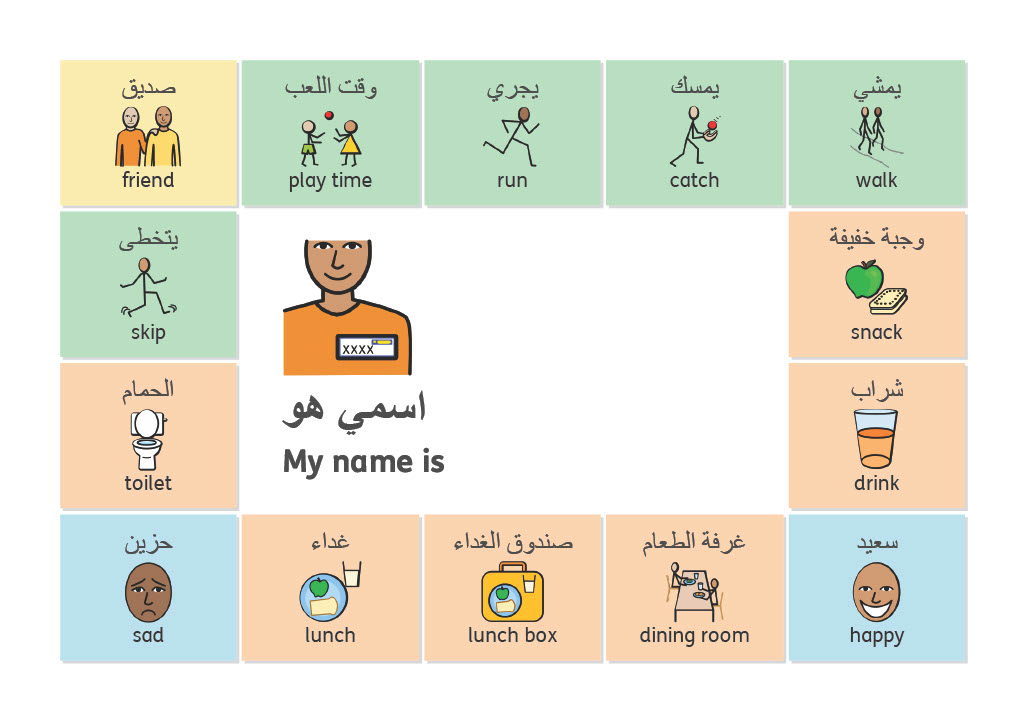
‘If children are able to link a word with an action, they are more likely to remember that word. I have been teaching children some key classroom vocabulary, such as pencil and whiteboard, using Total Physical Response (TPR). TPR connects a word with an action, for example, a teacher writing on a whiteboard or a child using a pencil. The student can help to create the actions themselves, and this serves as a powerful memory aid for them.’
3. Create an inclusive learning environment
When a child with EAL starts at a new international school, some aspects of school life can seem bewildering, particularly if they differ from the child’s previous setting. Younger children might wonder when it’s time to listen to a story or play outside. For an older student, mapping their way through a packed timetable of subjects in an unfamiliar language can be daunting.
If children are worrying about the school routine, they find it harder to enjoy activities, or focus on learning.
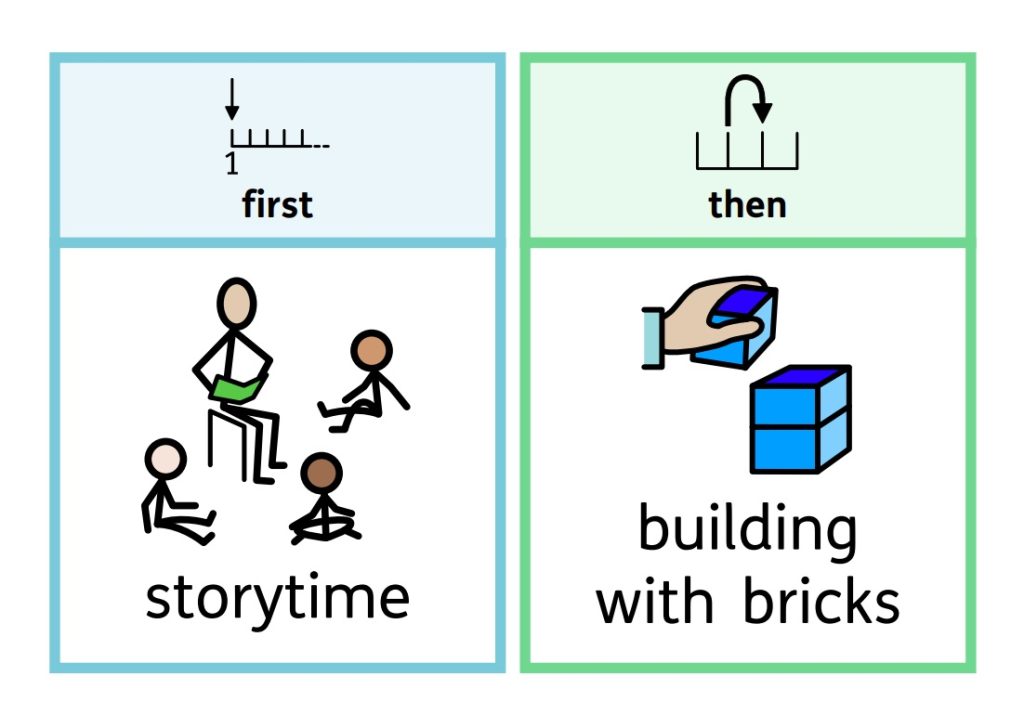
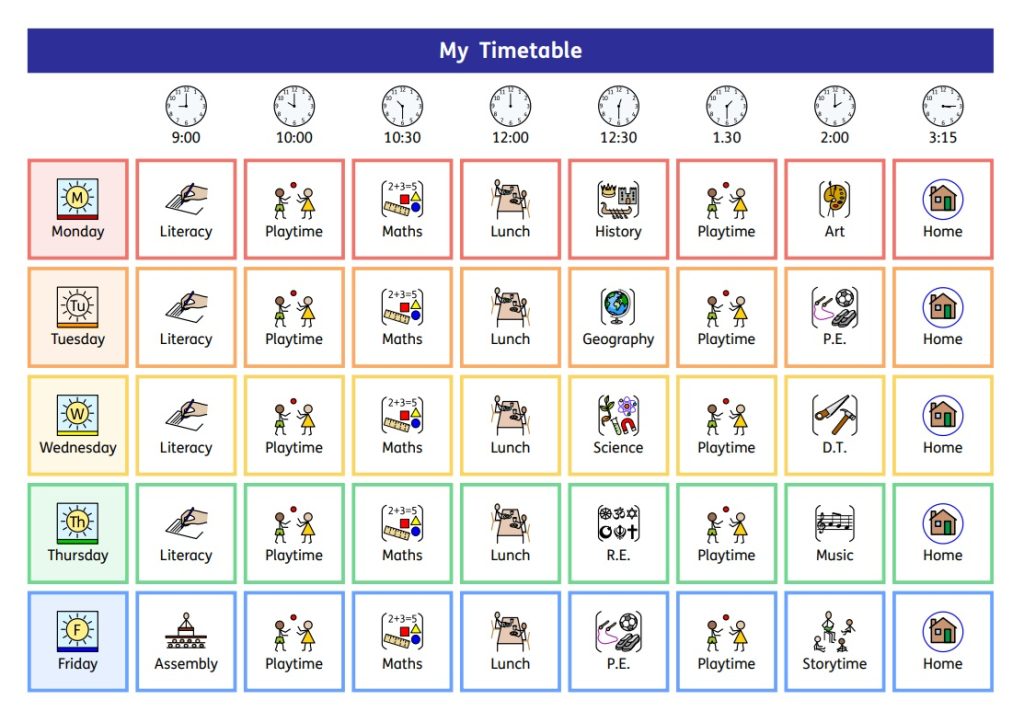
One of the approaches that works well is to provide a visual representation of the day ahead. A now and next board is ideal for young children, with a symbol to represent story time, followed by another symbol for outside play. Older children benefit from a full visual timetable of school subjects, including symbols for music, history or art alongside the written word.
Consistency is important too. When every classroom uses the same symbolised labels for equipment and areas, students can find their way around their environment independently. If students can easily find the glue sticks or locate the reading corner, it makes school a much less daunting place.
International schools taking the lead
International schools are taking on an increasingly important role in educating the global citizens of the future. We can also lead the way in supporting learners with EAL so they can find their voice, grow in confidence, and reach their full potential.

Laura Spargo is an education consultant, primary English curriculum specialist and former Head of Primary English at Kings’ School Al Barsha, Dubai.
She is also a contributor to the recently published report Unlock Understanding for Children with EAL, available here: https://www.widgit.com/about-symbols/booklets/eal-guide.pdf
FEATURE IMAGE: Zuzana Rainet For Unsplash+
