

WHEN STUDENTS ‘FREEZE’
A FIVE-MINUTE ‘CIRCLE BACK’ BEFORE THEY CHECK OUT
Dr. Alexis L. Hamlor recommends a technique that prevents students opting out of learning and supports them with dignity.
I don’t get it!
I used to think some students just wouldn’t ask for help.
They’d sit in front of a blank page. Put their head down. Ask to go to the bathroom the moment independent work started. Or hit you with the classic, loud-enough-for-the-room: “I don’t get it.”
If you’ve been in education for longer than five minutes, you’ve seen it. Teachers see it when the room shifts into work mode. Leaders see it when they pop into classrooms and notice the same student stalled while everyone else is moving.
Over the years I’ve learned that a lot of “refusal” is really “I don’t know how to begin.” When students freeze, avoid, or shut down, it’s often an executive function and help-seeking gap—not a content problem.
But here’s the part that matters most: how you respond.
In classrooms, it’s easy to glance at the shutdown and move toward the students who are participating. Not out of neglect—out of survival. Your unintended message becomes: If you don’t jump in right away, you’re out for the rest of the lesson.
That’s how one moment of freezing turns into check-out.
The fix is simple and powerful: circle back on purpose. Make re-entry predictable. Give students another at-bat.
Transferring responsibility
Here’s an honest question for educators: do we let students who froze—after raising a hand or being cold called—get a free pass because they said “I don’t know” or went silent?
It would be easy; the lesson must move forward.
But the real question is this: Do we circle back when the pressure is lower and give that student another opportunity to respond?
‘Circle back’ as a technique does two things at once. It communicates a no opt-out culture: participation and effort are non-negotiable, and “I don’t know” isn’t the end of thinking. It also communicates dignity and belonging, recognizing even if a student freezes, they are still part of the lesson—and still get a pathway back in. Most importantly, it teaches students what to do when they’re stuck and how to rejoin the learning community.
Breaking the pattern
Across classrooms and coaching conversations, the pattern shows up the same way: a student’s silence becomes a shortcut. The class is moving, so we move with it—and the student who froze becomes invisible for the rest of the period.
So, I started paying attention to a smaller question: what does re-entry look like ‘in the moment?
I noticed two things:
- Students who freeze often don’t lack ability—they lack a first step and safe language for help.
- Teachers who successfully reintegrate students don’t do it with a speech—they do it with a routine.
To keep myself honest, I tracked three quick indicators in two-week cycles: start time, re-entry within 3–5 minutes after a circle back, and whether “I don’t get it” shifted into checking questions. The pattern was consistent: quicker starts, more re-entry, fewer quiet exits. That’s where the five-minute fix comes in.
The 5-Minute Fix (and why it works)
This routine fits inside the lesson you already teach. It’s short by design.
- Spot the silent signals early
Look for:
- Blank pages
- Start delay
- Avoidance moves (bathroom, supplies, wandering)
- Give a first step as a way back (not a full reteach)
Use one prompt:
- “Show me where you started.”
- “Which part is unclear?”
Then give one entry tool:
- First-step line
- Two-minute launch
- Done definition
- Model Match
- Teach how to ask for help:
Teach a script students can use when they are ‘stuck’:
- “I’m stuck on ___.”
- “I tried ___.”
- “Can you help me with the first step/directions/an example?”
Then, upgrade to checking questions:
- “Can you check my first step?”
- “Is my setup correct?”
- Circle back quickly
Return in 2–4 minutes, and instead of asking “Did you, do it?” say:
- “Show me what you’ve got so far.”
- “What’s your next step?”
- Close the loop with dignity and tie it to action:
- “You restarted. That’s the skill.”
- “You stayed in it. Keep going.”
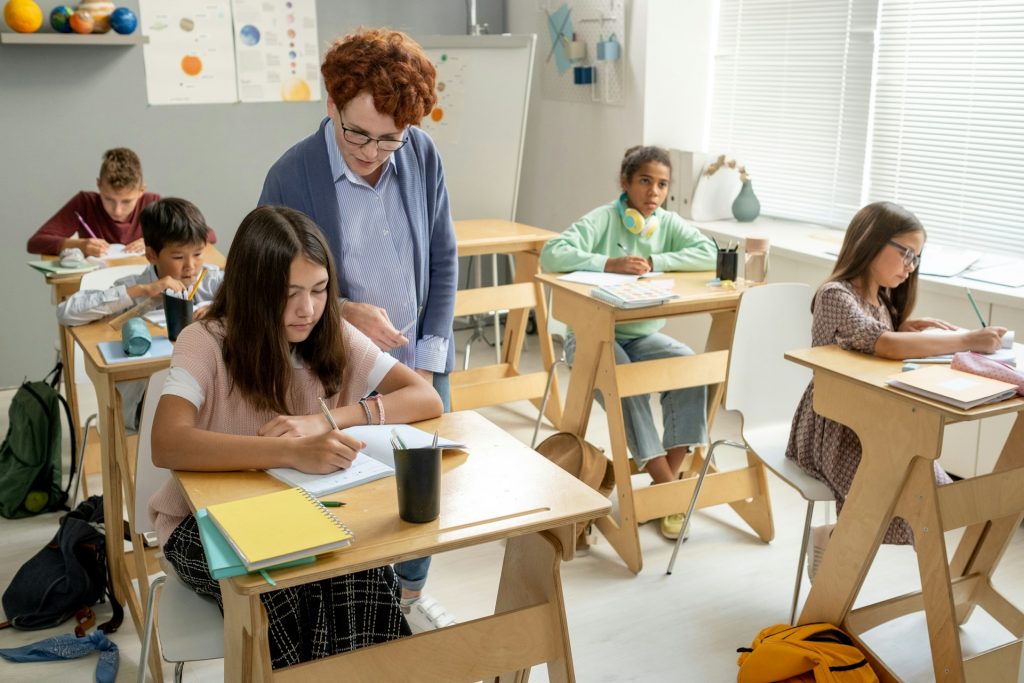
Outcomes and implications for practice
When circle back becomes a routine, the following changes show up quickly:
- fewer quiet exits
- better questions
- less learned helplessness, and
- a stronger classroom culture.
And as you go forward, make the return non-negotiable. If you don’t circle back, students learn to wait you out. Therefore:
- Standardize one first-step tool and one help script and practice them like procedures.
- Protect dignity by circling back privately whenever possible so accountability doesn’t become shame.
- For leaders, look for the system: Is there a consistent re-entry routine? Do students have language for asking for help? Do teachers return to the original student after a freeze?
- When a school introduces circle back as shared practice—not a personality trait—students learn they can struggle, get support, and still contribute to any class.
And its powerful: ‘Circle back’ says: You’re still in this with us and ‘no opt out’ says: And we believe you can do it.
Experiencing that combination is how students stop learning how to ‘escape’—and start learning resilience.

Dr. Alexis L. Hamlor is an educational leader and scholar-practitioner with more than a decade of experience across NYC public and charter schools. A former special education teacher, mentor, instructional coach, and Dean of Special Education, she supports inclusive instruction, compliant service delivery, and educator development.
FEATURE IMAGE: by amgun from iStock
Support Image: by Getty Images For Unsplash+
Video Reference Hyper Links
The Practitioner Playbook. (2025, April 17). No opt out: Effective questioning. YouTube.https://www.youtube.com/watch?v=cq3WQ5ufna0
Student perspective (the “why”): sixth graders explain why cold call and no opt out helps them stay engaged—even when they’re unsure.
EL Education. (2018, January 17). Kids like cold call and no opt out. YouTube.https://www.youtube.com/watch?v=Dvga35Iy21E
