

FROM LITERACY TO LEADERSHIP
What has enabled RGS Worcester to become a world leader in AI? John Jones, Director of Innovation, reflects on the school’s eventful two-year journey.
Cherish the past, but look to the future

When Large Language Model (LLM) AI emerged in late 2022, The RGS Worcester Family of Schools recognised that the greatest threat it posed to education was inaction. As we started to plan our strategy, it was this conviction that has driven us forward ever since.
Rarely has our school motto Respice et Prospice (“Cherish the past but look to the future”) felt more relevant. Staying true to our values demanded purposeful action.
We began by looking inward. A thorough audit of our own understanding and practices became the foundation for all that followed. We know that staff develop at different speeds, and by consistently tracking understanding, usage, and the obstacles in our way, we have been able to refine training, target support, and scale what works.
Literacy first, always
Another early conviction shaped our approach: the belief that our entire community should be AI literate. With so much uncertainty at the outset, it was vital to ensure that everyone – pupils, staff, parents and governors – understood enough to respond to developments with confidence and clarity.
Over the past two years, we have developed a structured and evolving programme of professional development, curriculum design and community engagement. This has not been about trend chasing or crash courses but a deliberate commitment to building foundational AI literacy across all stakeholder groups.
Through age-appropriate curriculum integration for pupils, dedicated training for staff and governors, and well attended AI Information Evenings for parents, we have established a broad and deep understanding.
This shared literacy has given us the confidence not only to move forward together, but also to lead.

A whole-school, all-through curriculum
But what did we do about the curriculum? It had to be all through. AI is now embedded from Key Stage 1 to Key Stage 5 (KG2 to G12). Pupils begin exploring AI fundamentals in Key Stage 1 through platforms such as Code.org and Google’s Teachable Machine. By Year Six (G5), they are supported by personalised Sphinx AI chatbots that help them explore and consolidate learning across subjects.
By Year Eight (G7), within the Computer Science curriculum, every pupil completes a dedicated module on large language models. The focus is not only on how they work, but on developing critical thinking and healthy scepticism. Pupils receive a certificate in recognition of their efforts.

From Year Nine (G8) onwards, all pupils gain access to Google Gemini for Education, a secure school specific version designed with safeguarding and data privacy at its core. Before accessing the tool, every pupil completes a 90 minute foundation session entitled Teaching Responsible Use of AI. This ensures they have the knowledge and critical understanding to use AI responsibly and ethically.
By the time pupils reach the Sixth Form (Grades 11 and 12), they engage with the broader implications of AI through digital enrichment and the IDEA Programme. From September 2025, we will launch a bespoke AI course designed specifically for Sixth Form students. It will focus on core concepts, practical skills, subject specific applications and critical evaluation. The course has been shaped by recent pupil feedback and will be tailored to their interests and needs.
Our learning purpose: deep understanding
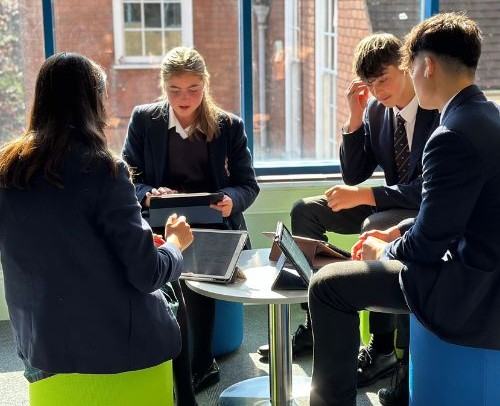
Across the curriculum, pupils use AI tools like Sainaptic, OLEX, and YouLearn to generate feedback, support explanation, and enhance analysis of complex content. The purpose is clear: to deepen understanding, not to shortcut learning. Pupils are increasingly encouraged to use AI to clarify complex concepts, brainstorm ideas, and test their thinking, while also critically evaluating AI-generated outputs. Teachers model reflective and ethical use of AI, embedding it into pedagogy without compromising high expectations.
Operational integration and cultural change
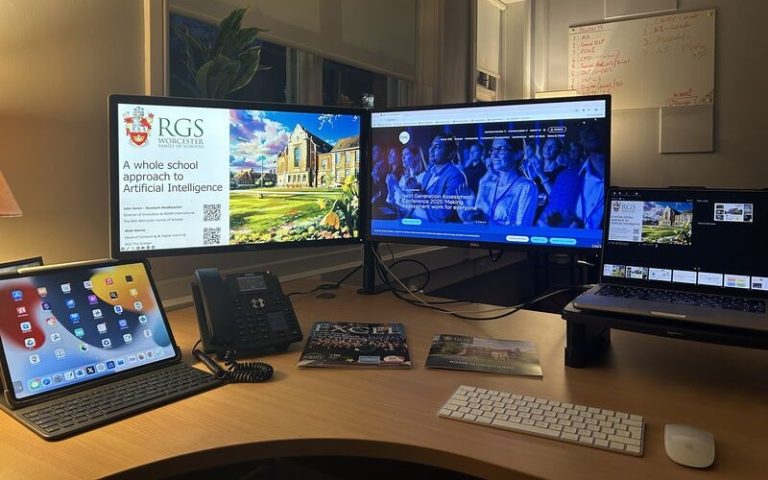
Our commitment to AI is whole school in another important sense. While much of the global conversation on AI in schools focuses, quite rightly, on pedagogy, our strategy also extends to operations. Tools such as Microsoft Copilot (finance), Claude (timetabling), Sage AI (HR), Gemini, and Notebook LM (admin and marketing) have been tested to improve efficiency and accuracy.
These tools reduce friction, enhance decision making and automate routine tasks, creating space for staff to focus on work that demands human insight. AI has also been introduced to support strategic planning, compliance and document production, with each tool carefully trialled, audited and monitored before wider use.
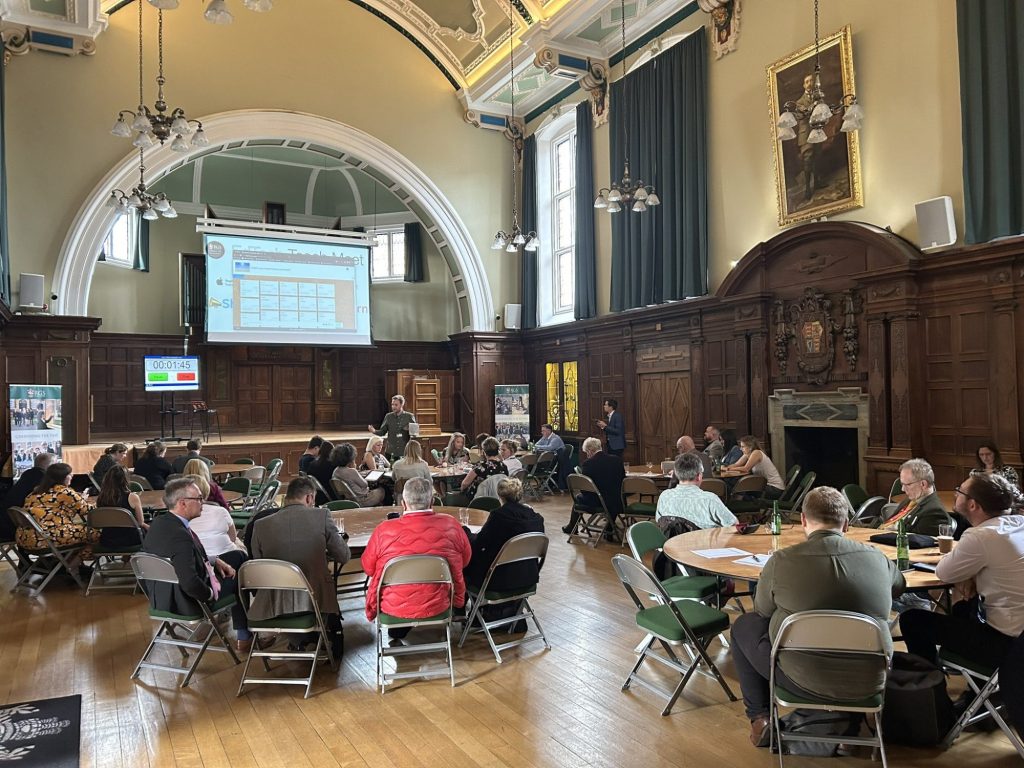
The progress we have made reflects a culture that values evidence and reflection as much as innovation. As part of our June 2025 INSET, we hosted an internal AI TeachMeet where colleagues from a range of departments shared how they are using AI in their subject areas. It was a practical and collaborative session that demonstrated just how deeply AI is now embedded across the school’s curriculum and practice.
From literacy to recognition and leadership
A great deal has happened over the past two years. We have aimed to be open minded, critically informed and grounded in healthy scepticism. That mindset has supported what is now a growing reputation for leadership in this field.
We began by building local partnerships, including as a founding member of the West Midlands EdTech Hub, and have since delivered AI focused professional development to over 50 schools, multi academy trusts and national forums. This has included work with organisations such as HMC, Rivers MAT, Windsor Academy Trust, the Apple Distinguished School Community and the global BETT Show.
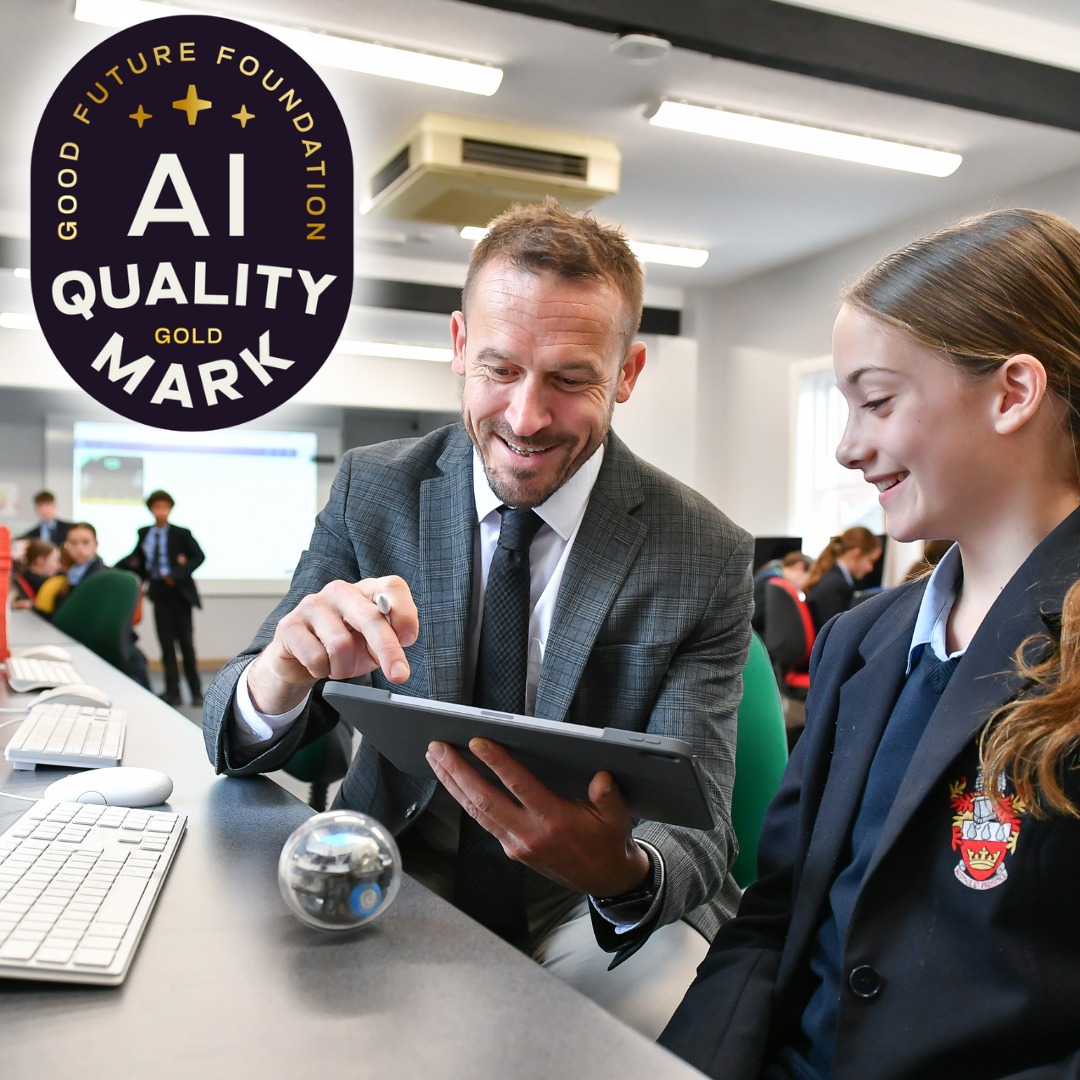
Along the way, we became the first school in the world to receive the Gold AI Quality Mark, awarded by the Good Future Foundation. We have also been invited to advise both the Austrian and Thai governments on national AI strategy in education, contributing school level insight into responsible implementation. In collaboration with national partners, we co-authored the Shape of the Future Report, launched at the House of Lords in September 2024, which sets out how education system leaders can respond to the opportunities and challenges of AI.
Back to the future
As we reflect on the journey so far, it is clear that much has evolved — and at remarkable speed. Yet we remain the same school, guided by our values, our ethos and our traditions. That continuity is important. At the same time, we move forward with greater insight, renewed confidence and a clearer sense of purpose. In a fast-changing world, our responsibility is to remain agile as a school while equipping our pupils with the knowledge and character they will need to meet the challenges and opportunities of the future.

John Jones is Assistant Headteacher and Director of Innovation at the Royal Grammar School, Worcester. He is also Director of RGSW International.
FEATURE & SUPPORT IMAGES with kind permission of RGS, Worcester
