
JAMES MACDONALD
Andy Homden meets the Director of the International School of Brussels on a very busy Monday morning.
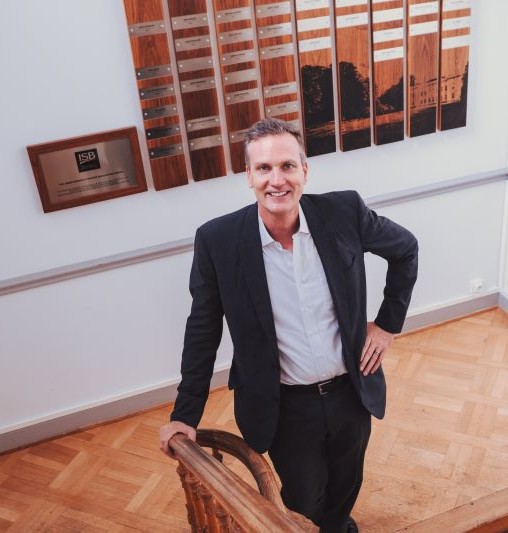
A forward-looking, even radical educational thinker, James MacDonald, spends as much time considering educational continuity as he does change. And one constant for him has been thinking about the importance of leadership.
Mentor
He has an innate understanding that if you want to get things done for the good of young people, effective school leadership is going to be important.
He counts himself fortunate that he encountered such an inspirational role model when he started his international career at Yokohama International School. In the great tradition of Welsh educators,
“Neil Richards was a hugely inspiring and very passionate leader.”
When the young MacDonald asked him, ‘If I want to become a Head of School, what would I have to do?’ Richards took him to the bulletin board in the faculty lounge, where in those days new jobs were posted.
“He asked me to look at the job descriptions and suggested that I think through the implications. It was a real eye-opener. My interest and training in Canada inclined me to the philosophical side of education rather than the practical. It was my first insight into the diversified skillset required to lead a school, especially on the business side of things”.

Multiple bottom lines
Taking an MBA became as important as a Master’s in Education. He did both and has no doubt that
“You must be as interested in finance as much as anything else to make education happen.”
He also refers to the importance of “multiple bottom lines”. In the world of commerce this means adding social and environmental ‘bottom lines’ to sit alongside profitability. In the world of education for MacDonald, it means adding a financial bottom line to a school’s educational objectives. Without successful outcomes in one you do not get success in the other and when educators cast a school’s business team’s motivation as somehow tainted, they are perpetuating a false dichotomy. An important role of a director, then, is to integrate educational and business thinking—much like how using two optical lenses provides a clearer view of the world than relying on just one.
The language of leadership
He talks about being ‘bilingual’ as a school leader. You have to speak the language of business as well as that of education. More – you have to immerse yourself in the culture of business if you are going to hold your own in most board meetings when you will, for example, be presenting five-year projections to some of the sharpest financial minds in your community. You simply have to be fluent in this other language and speak it with understanding and confidence.
In fact, a School Director needs to be a polyglot – speaking the languages of law and tech to a high standard as well as that of finance as a native level speaker!

The biggest step on the ladder
MacDonald sees one of the biggest steps on the leadership ladder is being able to move from overseeing sectional budgets comprised of things like departmental textbook orders as the Head of School section, to feeling in control as School Director when outlining how the overall school’s financial strategy can drive a development plan in order, say, to improve reading in the elementary school.
He returns to the idea of analysing job descriptions, this time with a little help from an AI companion. In a recent presentation to the AAIE he showed that when you compare the job descriptions of prospective School Directors with those of Heads of School section, you find a 40% increase in requirements for business skills and knowledge. It’s an area, he thinks, that probably requires more support as people move to higher positions.
The driver of learning
While there is little doubt that James MacDonald the financial thinker is at one with himself in the board room, there is also no doubt that learning is the driver of what happens at his school. Education really is his first love. He relishes the flexibility that international education allows and has long held the opinion that international schools should not simply offer the set pieces of an international curriculum. He goes back to the ideas of his mentor and when Neil Richards told him ‘just because someone tells you to do something – you don’t necessarily have to do it – even if the directive does come from the IB!’
“It was just such an amazing sort of moment when you have this universe revealed.”

Collaborating with AI companions
And building in flexibility into the curriculum is very much what ISB is about. MacDonald thinks that while most students will still aspire to graduate high school in the future, more are already questioning university as the automatic next step. He thinks a K12 education will increasingly involve “a customised rather than a standard model” as the outcome and refers to the AI revolution as being very significant, though just as maths teachers survived the introduction of the scientific calculator in the 1980s, we will need to adapt our educational approach with AI.
“Young people are already collaborating with AI companions rather than just using them as a tool or a resource. Yes – you must caution against the possibility of AI ‘hallucinations’, which students will learn to question, but whether AI companions are sentient beings or not is beside the point, because they push your own thinking and you get replies you would not necessarily expect, to which you have to respond.”
Continuity
But in looking to the future, it’s not all about change and disruption. He agrees with Jeff Bezos who prefers the question “what’s going to stay the same?” to “what’s going to change?”
It’s a really good point.
“In fifteen years relationships and the social element of school” will still be central to learning as will “challenging kids without overwhelming them.” And in terms of theory, he does not see the idea of the Zone of Proximal Development being any less important in the future than it is today or when it was first formulated by Vygotsky in the 1930s:
“Fifteen years ago, I was expecting more change, but our current graduates did not go through the kind of revolution I had anticipated.”
Time
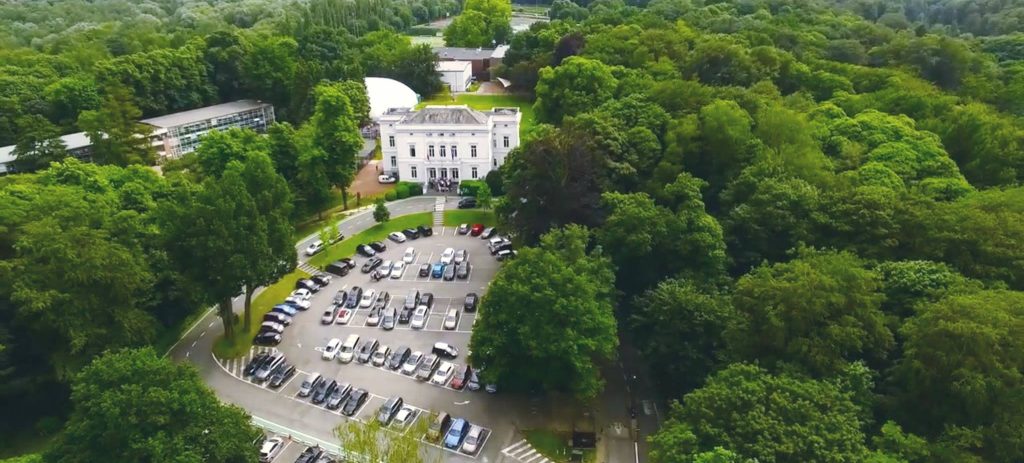
None of this means that it is easy to do what you have to do while finding time for yourself. He acknowledges that effective leadership probably takes “more bandwidth than we are given.” But it is clear that trying to occupy any professional space too completely will be damaging and ultimately self-defeating for the leader and the school. Time with family and for keeping fit is essential. He also rides his bike to and from school, year-round, whatever the Belgian weather throws at him.
And as he says,
“The forest en route is a great restorative.”
James MacDonald was talking to ITM Editor, Andy Homden

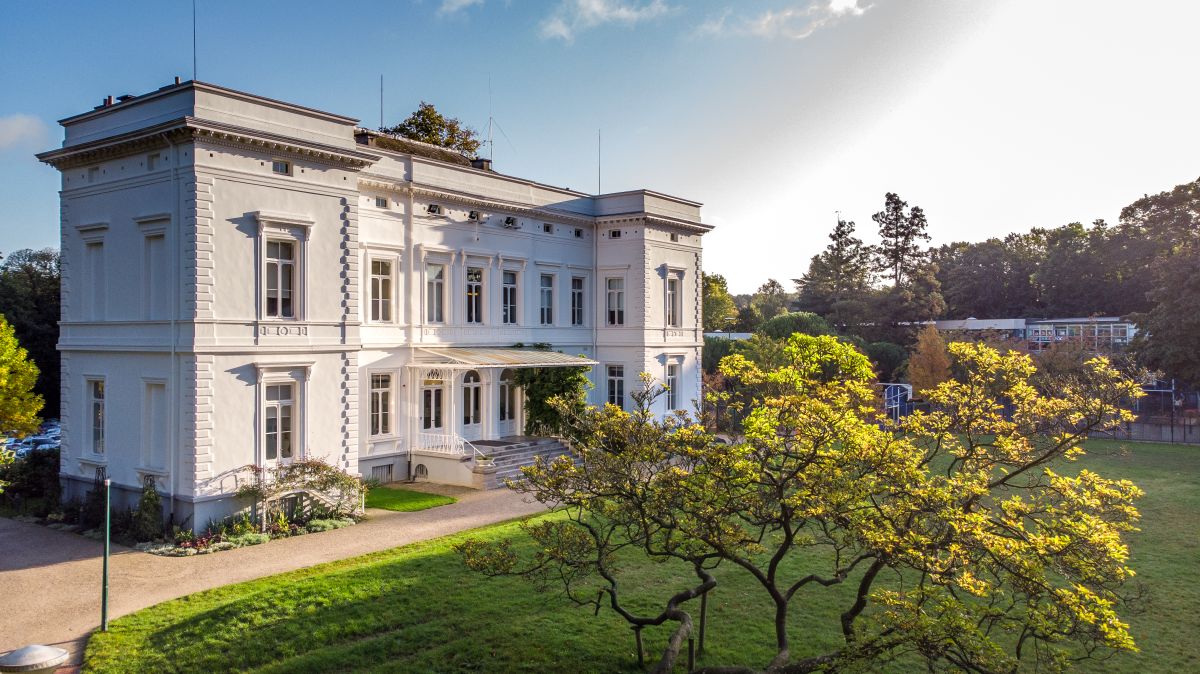
Images of ISB the International School of Brussels with kind permission.
Support Images: zimmytws on iStock, Mohamed Nohassi For Unsplash+ and Andrew Neel on Unsplash
