

Coaching and leadership development
Olivia Birkin-Hewitt of Best Practice Network looks at the role that good coaching plays in amplifying the impact of professional development.
When leaders reflect on their professional growth, the influence of great coaching often stands out. In the course of our work, we are continually inspired by stories from participants who credit their coaches as pivotal in their leadership journey.
We believe that there are four key elements of effective professional learning:
- Deliberate practice
- Reflection
- Contextualised support
- A growth mindset
We also believe that coaching amplifies the impact of each of these four elements.
1. Deliberate practice
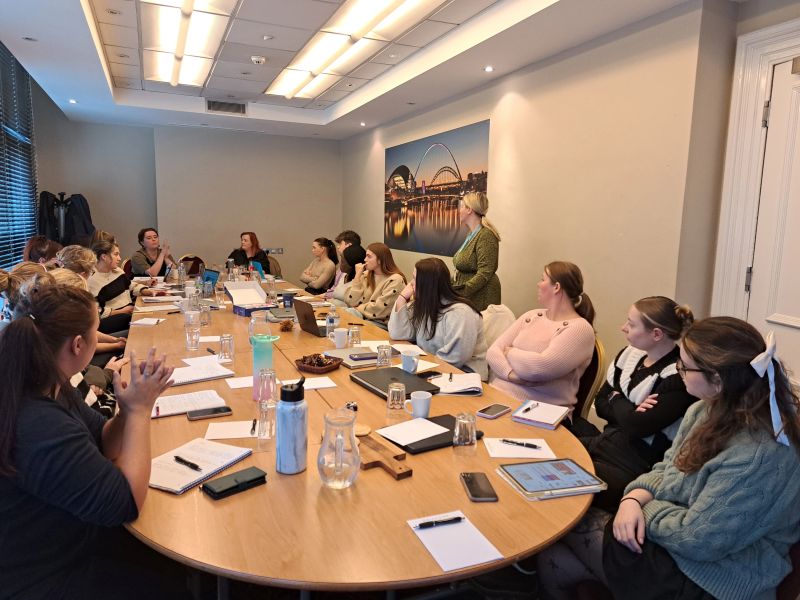
At the heart of transformative leadership training lies the concept of ‘deliberate practice’ (Deans et al., 2015). This approach, used across all our NPQ courses, centres on purposeful, targeted activities designed to push individuals beyond their comfort zones. It is within this space where challenge meets support and where true growth occurs.
Coaches play a vital role in facilitating deliberate practice. They provide the scaffolding for leaders to take measured risks, experiment with new strategies, and reflect on the outcomes. By focusing on iterative improvement, coaches help participants develop resilience and a deeper understanding of their leadership capabilities.
For example, a coach might challenge a school leader to tackle a complex cultural issue or adopt a novel approach to curriculum design. Through ongoing dialogue, feedback, and encouragement, the coach ensures these challenges translate into meaningful learning experiences.
This aligns with McKinsey & Company’s (2020) findings on how high-quality leadership development drives sustained improvement in schools.
2. Reflection as a catalyst for change
Research, including insights from Joyce and Showers (2002), underlines how reflection sharpens leadership skills. Time and again, participants on our programmes highlight how structured reflective practices, guided by their coaches, allow them to step back and assess their leadership with fresh eyes.
Reflective coaching doesn’t just help leaders identify areas for improvement; it encourages them to question assumptions, leading to solutions that resonate deeply with their unique contexts. This reflective process is the foundation for long-lasting change, as leaders develop the confidence to address challenges with clarity and precision.
3. Contextualised support
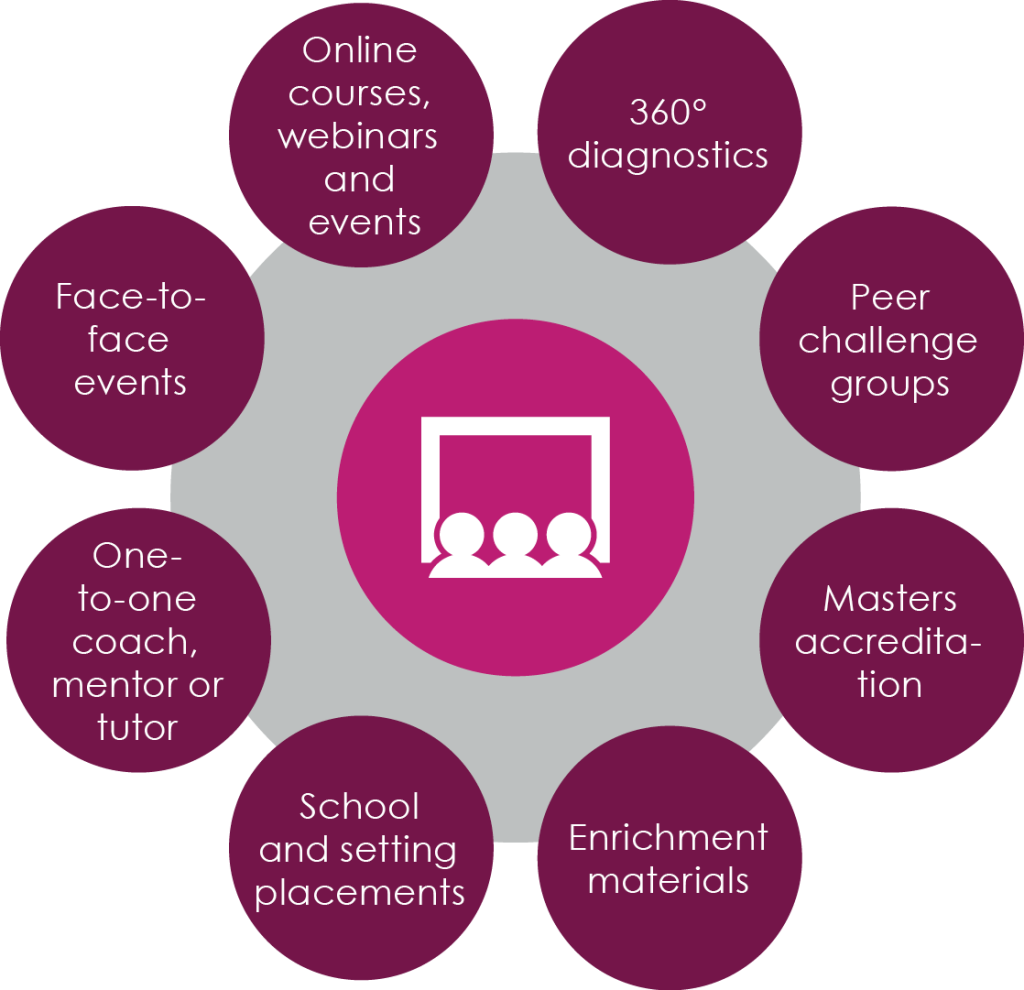
No two schools are the same, and neither are their leaders. International contexts bring additional diversity to the equation, from cultural nuances to system-specific challenges. Our coaches work closely with participants to translate theory into practical actions suited to their settings. This tailored support stands in contrast to one-size-fits-all models of CPD: contextualised support ensures that leaders feel equipped to meet the demands of their roles.
Data from recent evaluations of National Professional Qualification courses (NPQs) reinforces this: satisfaction with contextualised learning scores highly, with 81% of participants rating face-to-face coaching as exceptionally valuable. Our own collected data from past participants of NPQs have declared a 98% satisfaction rating when it comes to Coaching.
4. Fostering a growth mindset through continuous learning

Coaching isn’t a one-off event; it’s a journey. Sutton Trust (2018) highlighted the link between consistent, high-quality CPD and long-term improvements in pupil outcomes. At BPN, we champion this idea, embedding a growth mindset in our participants. Coaches act as accountability partners, ensuring that leaders keep evolving long after the programme ends.
Moreover, coaching supports leaders as they grapple with new challenges, helping them apply their learning iteratively and maintain momentum in their development. This focus on improvement not only benefits the individual leader but also cascades to their teams and schools, fostering a culture of continuous learning.
Building a culture of leadership excellence
Leadership development isn’t just about completing a programme – it’s about nurturing a pipeline of leaders ready to meet the complex demands of today’s schools. As schools worldwide grapple with new challenges, the role of tailored, reflective and growth-oriented coaching has never been more critical.
By prioritising contextualised, reflective, and growth-focused learning, we empower educators to lead with confidence and creativity, making a tangible difference in their schools and communities.

Olivia Birkin-Hewitt is the International Account Manager at Best Practice Network which focuses on supporting their international partner schools by providing quality teacher training solutions and great lines of communication.
You can learn more about BPN’s National Professional Qualifications (NPQs) for international schools here: https://www.bpninternational.com/

FEATURE IMAGE: Getty Images For Unsplash+
Support Images: With kind permission from Best Practice Network.
